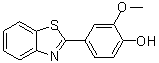
YL-109 is a novel anticancer agent which has ability to inhibit breast cancer cell growth and invasiveness in vitro and in vivo. YL-109 repressed the sphere-forming ability and the expression of stem cell markers in MDA-MB-231 mammosphere cultures. YL-109 increased the expression of carboxyl terminus of Hsp70-interacting protein (CHIP), which suppresses tumorigenic and metastatic potential of breast cancer cells by inhibiting the oncogenic pathway. YL-109 induced CHIP transcription because of the recruitment of the aryl hydrocarbon receptor (AhR) to upstream of CHIP gene in MDA-MB-231 cells. Consistently, the antitumor effects of YL-109 were depressed by CHIP or AhRknockdown in MDA-MB-231 cells [1]. in vivo: Mice treated with vehicle showed significantly enlarged tumors, whereas mice treated with YL-109 showed attenuated tumor growth using MCF-7 cells. Interestingly, YL-109 also suppressed tumor growth in mice injected with MDA-MB-231 cells. Compared with the vehicle control, YL-109 significantly reduced lung metastasis
Physicochemical Properties
| Molecular Formula | C14H11NO2S | |
| Molecular Weight | 257.31 | |
| Exact Mass | 257.051 | |
| CAS # | 36341-25-0 | |
| Related CAS # |
|
|
| Appearance | Light yellow to yellow solid powder | |
| Density | 1.327g/cm3 | |
| Boiling Point | 446.448ºC at 760 mmHg | |
| Flash Point | 223.804ºC | |
| Index of Refraction | 1.685 | |
| LogP | 3.677 | |
| InChi Key | KRVBOHJNAFQFPW-UHFFFAOYSA-N | |
| InChi Code | InChI=1S/C14H11NO2S/c1-17-12-8-9(6-7-11(12)16)14-15-10-4-2-3-5-13(10)18-14/h2-8,16H,1H3 | |
| Chemical Name | 4-(1,3-benzothiazol-2-yl)-2-methoxyphenol | |
| Synonyms |
|
|
| HS Tariff Code | 2934.99.9001 | |
| Storage |
Powder-20°C 3 years 4°C 2 years In solvent -80°C 6 months -20°C 1 month |
|
| Shipping Condition | Room temperature (This product is stable at ambient temperature for a few days during ordinary shipping and time spent in Customs) |
Biological Activity
| ln Vitro | In breast cancer cells, YL-109 (0.001-10 μM; 96 h or 24 h) inhibits cell motility, proliferation, and invasiveness[1]. In MDA-MB-231 cells, YL-109 (1 μM) raises CHIP mRNA and protein levels[1]. |
| ln Vivo | In vivo, YL-109 (15 mg/kg; sc every 2 days) suppresses the growth of tumors as well as the metastasis of breast cancer cells[1]. |
| Cell Assay |
Cell Proliferation Assay[1] Cell Types: MCF-7 and MDA-MB-231 cells Tested Concentrations: 0.001, 0.01, 0.1, 1, 10 μM Incubation Duration: 96 hrs (hours) Experimental Results: Strongly inhibited cell proliferation of MCF -7 and MDA-MB-231 cells in a dose-dependent manner (IC50=85.8 nM and 4.02 μM, respectively). |
| Animal Protocol |
Animal/Disease Models: BALB/cAjcl-nu/nu female mice (4-5 weeks) inoculated with MCF-7 or MDA-MB-231 cells[1] Doses: 15 mg/kg Route of Administration: Sc every 2 days for 63 days Experimental Results: Suppressed tumor growth in mice injected with MCF-7 and MDA-MB-231 cells. |
| References |
[1]. 2-(4-Hydroxy-3-methoxyphenyl)-benzothiazole suppresses tumor progression and metastatic potential of breast cancer cells by inducing ubiquitin ligase CHIP. Sci Rep. 2014 Nov 18;4:7095. |
Solubility Data
| Solubility (In Vitro) |
|
|||
| Solubility (In Vivo) |
Solubility in Formulation 1: ≥ 3 mg/mL (11.66 mM) (saturation unknown) in 10% DMSO + 40% PEG300 + 5% Tween80 + 45% Saline (add these co-solvents sequentially from left to right, and one by one), clear solution. For example, if 1 mL of working solution is to be prepared, you can add 100 μL of 30.0 mg/mL clear DMSO stock solution to 400 μL PEG300 and mix evenly; then add 50 μL Tween-80 to the above solution and mix evenly; then add 450 μL normal saline to adjust the volume to 1 mL. Preparation of saline: Dissolve 0.9 g of sodium chloride in 100 mL ddH₂ O to obtain a clear solution. Solubility in Formulation 2: 3 mg/mL (11.66 mM) in 10% DMSO + 90% (20% SBE-β-CD in Saline) (add these co-solvents sequentially from left to right, and one by one), clear solution; with ultrasonication. For example, if 1 mL of working solution is to be prepared, you can add 100 μL of 30.0 mg/mL clear DMSO stock solution to 900 μL of 20% SBE-β-CD physiological saline solution and mix evenly. Preparation of 20% SBE-β-CD in Saline (4°C,1 week): Dissolve 2 g SBE-β-CD in 10 mL saline to obtain a clear solution. Solubility in Formulation 3: ≥ 3 mg/mL (11.66 mM) (saturation unknown) in 10% DMSO + 90% Corn Oil (add these co-solvents sequentially from left to right, and one by one), clear solution. For example, if 1 mL of working solution is to be prepared, you can add 100 μL of 30.0 mg/mL clear DMSO stock solution to 900 μL of corn oil and mix evenly. (Please use freshly prepared in vivo formulations for optimal results.) |
| Preparing Stock Solutions | 1 mg | 5 mg | 10 mg | |
| 1 mM | 3.8864 mL | 19.4318 mL | 38.8636 mL | |
| 5 mM | 0.7773 mL | 3.8864 mL | 7.7727 mL | |
| 10 mM | 0.3886 mL | 1.9432 mL | 3.8864 mL |