|
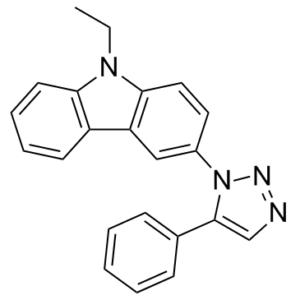
MBQ-167 (MBQ167) is a dual inhibitor of Rac/Cdc42 (Ras-related C3 botulinum toxin substrate and cell division control protein 42 homolog) with anticancer activity. In metastatic MDA-MB-231 cells, it inhibits Rac 1/2/3 and Cdc42 with IC50 values of 103 nM and 78 nM, respectively. Thus, without influencing the activities of Rho, MAPK, or Akt, MBQ-167 dramatically reduces the downstream effector p21-activated kinase (PAK) signaling and the activity of STAT3. Additionally, MBQ-167 prevents the migration, viability, and formation of mammospheres in breast cancer cells. Additionally, MBQ-167 inhibits actin-based extensions on the cell surface and causes a loss of cell polarity in cancer cells that have undergone the epithelial-to-mesenchymal transition, which ultimately leads to the cells' separation from the substratum. Extended (120 h) incubation in MBQ-167 reduces the viability of metastatic cancer cells with a GI50 of about 130 nmol/L, while having no effect on mammary epithelial cells that are not cancerous. Cancer cell viability is lost as a result of G2-M cell-cycle arrest mediated by MBQ-167 and subsequent apoptosis, particularly of the detached cells. In immunocompromised mice, MBQ-167 inhibits the growth and metastasis of mammary tumors by about 90% in vivo. Finally, MBQ-167 has the potential to be developed as an anticancer medication and a dual inhibitory probe for the study of Rac and Cdc42 because it is 10× more potent than other Rac/Cdc42 inhibitors that are currently on the market.
|
Physicochemical Properties
| Molecular Formula |
C22H18N4
|
| Molecular Weight |
338.405124187469
|
| Exact Mass |
338.15
|
| Elemental Analysis |
C, 78.08; H, 5.36; N, 16.56
|
| CAS # |
2097938-73-1
|
| Related CAS # |
|
| PubChem CID |
129896932
|
| Appearance |
Light yellow to yellow solid powder
|
| LogP |
4.7
|
| Hydrogen Bond Donor Count |
0
|
| Hydrogen Bond Acceptor Count |
2
|
| Rotatable Bond Count |
3
|
| Heavy Atom Count |
26
|
| Complexity |
477
|
| Defined Atom Stereocenter Count |
0
|
| InChi Key |
LJCANTASZGYJLG-UHFFFAOYSA-N
|
| InChi Code |
InChI=1S/C22H18N4/c1-2-25-20-11-7-6-10-18(20)19-14-17(12-13-21(19)25)26-22(15-23-24-26)16-8-4-3-5-9-16/h3-15H,2H2,1H3
|
| Chemical Name |
9-ethyl-3-(5-phenyltriazol-1-yl)carbazole
|
| Synonyms |
|
| HS Tariff Code |
2934.99.03.00
|
| Storage |
Powder-20°C 3 years
4°C 2 years
In solvent -80°C 6 months
-20°C 1 month
|
| Shipping Condition |
Room temperature (This product is stable at ambient temperature for a few days during ordinary shipping and time spent in Customs)
|
|
Biological Activity
| Targets |
Cdc42 ( IC50 = 78 nM ); Ras 1/2/3 ( IC50 = 103 nM )
|
| ln Vitro |
In vitro activity: MBQ-167 (≥100 nM) causes a loss of polarity in metastatic breast cancer cells. Approximately 95% of metastatic MDA-MB-231 cells round and detach from the substratum after being treated with 500 nM MBQ-167 for 24 hours. AGS and NCI-N87 gastric cancer cells, SH-SY5Y neuroblastoma cells, Mia-PaCa-2 pancreatic cancer cells, SKOV3 ovarian cancer cells, GFP-HER2-BM, MDA-MB-468, and Hs578t human breast cancer cells are among the mesenchymal cancer cell types in which MBQ-167 induces this phenotype. After being treated for 24 hours with 250 nM MBQ-167, the attached population of MDA-MB-231 cells shows a decrease in Rac activation of about 25%, whereas the detached cells show a more responsive decrease of about 75%. Treatment with 250 or 500 nM MBQ-167 at earlier times (6 h) causes the attached cell population to exhibit a 40–50% reduction in Rac activity, whereas the detached population shows a similar inhibition[1]. |
|
| ln Vivo |
| MBQ-167-treated mice show a statistically significant decrease in tumor growth. Around 80% of tumor growth is reduced at sacrifice by 1.0 mg/kg BW of MBQ-167, and approximately 95% of tumor growth is reduced by 10 mg/kg BW of MBQ-167 treatment. MBQ-167 is 10X more effective than EHop-016 because it only reduces tumor growth by about 40% at 10 mg/kg BW. Mice treated with MBQ-167 exhibit comparable doubling times for both treatments (10 and 11 days)[1]. |
|
| Enzyme Assay |
In metastatic MDA-MB-231 cells, MBQ-167 is a dual inhibitor of Rac/Cdc42 (Ras-related C3 botulinum toxin substrate and cell division control protein 42 homolog), with IC50 values of 103 nM for Rac 1/2/3 and 78 nM for Cdc42, respectively.
|
| Cell Assay |
MBQ-167 at 250 or 500 nM is applied to MDA-MB-231 cells for a 24-hour period. To see the F-actin and the focal adhesions, cells are permeabilized, fixed, and stained with either vinculin or p-tyrosine.
|
| Animal Protocol |
| Mice: We utilize 4- to 5-week-old female athymic nu/nu mice. The fourth right mammary fat pad is injected with GFP-HER2-BM cells (~5×10⁵) in Matrigel under isofluorane inhalation to create orthotopic primary tumors. Animals are randomized into treatment groups (n=6) one week after vaccination, following tumor establishment. Three times a week, mice are given either 1. or 10 mg/kg BW MBQ-167 via intraperitoneal injection in a 100 μL volume, or a vehicle solution (12.5% ethanol, 12.5% Cremophor, and 75% 1X PBS pH 7.4). Until day 65, when sacrifice occurs, treatments are continued[1]. | |
|
| References |
[1]. Characterization of a Dual Rac/Cdc42 Inhibitor MBQ-167 in Metastatic Cancer. Mol Cancer Ther. 2017 May;16(5):805-818.
|
| Additional Infomation |
Rac/Cdc42 Inhibitor MBQ-167 is an orally bioavailable inhibitor of the Rho GTPases Ras-related C3 botulinum toxin substrate (Rac) and cell division control protein 42 homolog (Cdc42), with potential antineoplastic activity. Upon oral administration, Rac/Cdc42 inhibitor MBQ-167 targets, binds to and inhibits the activity of the GTP-binding proteins Rac and Cdc42 that are expressed on certain cancer cells and immunosuppressive immune cells in the tumor microenvironment (TME). This inhibits p21-activated kinase (PAK) and signal transducer and activator of transcription 3 (STAT3) signaling, induces cell-cycle arrest and apoptosis, and inhibits cancer cell proliferation and migration. MBQ-167 also reduces tumor-infiltrating macrophages and myeloid-derived suppressor cells (MDSCs) in the TME, which may abrogate the immunosuppressive nature of the TME. Rac and Cdc42, overexpressed or hyperactivated in various cancers, are homologous, small GTPases that regulate epithelial to mesenchymal transition, cell migration, invasion, and cell cycle progression and metastasis.
|
|
Solubility Data
| Solubility (In Vitro) |
| DMSO: 68~100 mg/mL (200.9~295.5 mM) | | Water: <1mg/mL | | Ethanol: >10mg/mL |
|
| Solubility (In Vivo) |
Solubility in Formulation 1: 2.5 mg/mL (7.39 mM) in 10% DMSO + 40% PEG300 +5% Tween-80 + 45% Saline (add these co-solvents sequentially from left to right, and one by one), suspension solution; with sonication.
For example, if 1 mL of working solution is to be prepared, you can add 100 μL of 25.0 mg/mL clear DMSO stock solution to 400 μL PEG300 and mix evenly; then add 50 μL Tween-80 + to the above solution and mix evenly; then add 450 μL normal saline to adjust the volume to 1 mL.
Preparation of saline: Dissolve 0.9 g of sodium chloride in 100 mL ddH₂ O to obtain a clear solution.
(Please use freshly prepared in vivo formulations for optimal results.)
|
| Preparing Stock Solutions |
|
1 mg |
5 mg |
10 mg |
| 1 mM |
2.9550 mL |
14.7750 mL |
29.5500 mL |
| 5 mM |
0.5910 mL |
2.9550 mL |
5.9100 mL |
| 10 mM |
0.2955 mL |
1.4775 mL |
2.9550 mL |
*Note: Please select an appropriate solvent for the preparation of stock solution based on your experiment needs. For most products, DMSO can be used for preparing stock solutions (e.g. 5 mM, 10 mM, or 20 mM concentration); some products with high aqueous solubility may be dissolved in water directly. Solubility information is available at the above Solubility Data section. Once the stock solution is prepared, aliquot it to routine usage volumes and store at -20°C or -80°C. Avoid repeated freeze and thaw cycles. |