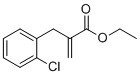
INF39 (INF-39; INF 39), an acrylate derivative, is a potent, irreversible and nontoxic inhibitor of NLRP3 with potential anti-inflammatory activity. It is able to block the release of IL-1β (interleukin-1β) from macrophages. Pharmacological inhibition of NLRP3 inflammasome activation by INF39 may offer a new approach in the treatment of inflammatory bowel disease. In vivo studies confirmed the ability of the selected lead to alleviate the effects of colitis induced by 2,4-dinitrobenzenesulfonic acid in rats after oral administration. Bioluminescence resonance energy transfer experiments proved that INF39 was able to directly interfere with NLRP3 activation in cells.
Physicochemical Properties
| Molecular Formula | C12H13CLO2 | |
| Molecular Weight | 224.68 | |
| Exact Mass | 224.06 | |
| CAS # | 866028-26-4 | |
| Related CAS # |
|
|
| PubChem CID | 69150705 | |
| Appearance | Colorless to light yellow liquid | |
| Density | 1.1±0.1 g/cm3 | |
| Boiling Point | 309.3±30.0 °C at 760 mmHg | |
| Flash Point | 149.6±20.0 °C | |
| Vapour Pressure | 0.0±0.7 mmHg at 25°C | |
| Index of Refraction | 1.522 | |
| LogP | 4.14 | |
| Hydrogen Bond Donor Count | 0 | |
| Hydrogen Bond Acceptor Count | 2 | |
| Rotatable Bond Count | 5 | |
| Heavy Atom Count | 15 | |
| Complexity | 238 | |
| Defined Atom Stereocenter Count | 0 | |
| SMILES | O=C(C(CC1C(Cl)=CC=CC=1)=C)OCC |
|
| InChi Key | VTAOWWAFBSFWSG-UHFFFAOYSA-N | |
| InChi Code | InChI=1S/C12H13ClO2/c1-3-15-12(14)9(2)8-10-6-4-5-7-11(10)13/h4-7H,2-3,8H2,1H3 | |
| Chemical Name |
|
|
| Synonyms |
|
|
| HS Tariff Code | 2934.99.9001 | |
| Storage |
Powder-20°C 3 years 4°C 2 years In solvent -80°C 6 months -20°C 1 month |
|
| Shipping Condition | Room temperature (This product is stable at ambient temperature for a few days during ordinary shipping and time spent in Customs) |
Biological Activity
| ln Vitro | At 10 μM, ATP and nigericin may both strongly suppress the release of IL-1β, which is triggered by INF39. INF39 inhibits the macrophages' pyroptosis and caspase-1 activation. INF39 has the ability to inhibit both the NF-κB pathway and NLRP3 activation. Although it does not specifically target caspase-1 activity, INF39 may interact with Cys-SH residues in the cysteine protease caspase-1's active site. It is possible for INF39 to disrupt the basal NLRP3 conformation by lowering the steady state (or basal) BRET signal of NLRP3 without impairing cell survival. INF39 affects a second step of NLRP3 conformational change that may be connected to the receptor's ATPase activity and independent of the decrease in intracellular K+. However, it does not prevent the first conformational changes that NLRP3 experiences upon sensing the decrease in intracellular K+. INF39 travels without changing chemically to reach the intestinal epithelium. It is probably going to operate locally at the mucosal epithelial level after being absorbed into epithelial cells[1]. | ||
| ln Vivo | Rats given 2,4-dinitrobenzenesulfonic acid treatment exhibit decreased colonic and systemic inflammation upon oral delivery of INF39. Adequate increases in body weight are noted in inflammatory rats receiving INF39 (12.5, 25, and 50 mg/kg). Spleen weight increases significantly (+39.3%) after receiving DNBS treatment. INF39 treatment considerably reduces such an increase (+2.2, +4.3, and +4.8% at 12.5, 25, and 50 mg/kg, respectively). The reduction in colonic length (−19, −13, and −8% at 12.5, 25, and 50 mg/kg, respectively) is dose-dependently attenuated by the inhibition of NLRP3 inflammasome complex with INF39. The macroscopic damage score in rats treated with INF39 significantly decreased (to 4.7 at 12.5 mg/kg, 3.1 at 25 mg/kg, and 2.8 at 50 mg/kg). In rats treated with DNBS, oral treatment of INF39 lowers levels of TNF, IL-1β, and colonic myeloperoxidase[1]. | ||
| Animal Protocol |
|
||
| References |
[1]. Development of an Acrylate Derivative Targeting the NLRP3 Inflammasome for the Treatment of Inflammatory Bowel Disease.J Med Chem. 2017 May 11;60(9):3656-3671. |
Solubility Data
| Solubility (In Vitro) |
|
|||
| Solubility (In Vivo) |
Solubility in Formulation 1: ≥ 2.5 mg/mL (11.13 mM) (saturation unknown) in 10% DMSO + 40% PEG300 + 5% Tween80 + 45% Saline (add these co-solvents sequentially from left to right, and one by one), clear solution. For example, if 1 mL of working solution is to be prepared, you can add 100 μL of 25.0 mg/mL clear DMSO stock solution to 400 μL PEG300 and mix evenly; then add 50 μL Tween-80 to the above solution and mix evenly; then add 450 μL normal saline to adjust the volume to 1 mL. Preparation of saline: Dissolve 0.9 g of sodium chloride in 100 mL ddH₂ O to obtain a clear solution. Solubility in Formulation 2: ≥ 2.5 mg/mL (11.13 mM) (saturation unknown) in 10% DMSO + 90% (20% SBE-β-CD in Saline) (add these co-solvents sequentially from left to right, and one by one), clear solution. For example, if 1 mL of working solution is to be prepared, you can add 100 μL of 25.0 mg/mL clear DMSO stock solution to 900 μL of 20% SBE-β-CD physiological saline solution and mix evenly. Preparation of 20% SBE-β-CD in Saline (4°C,1 week): Dissolve 2 g SBE-β-CD in 10 mL saline to obtain a clear solution. Solubility in Formulation 3: ≥ 2.5 mg/mL (11.13 mM) (saturation unknown) in 10% DMSO + 90% Corn Oil (add these co-solvents sequentially from left to right, and one by one), clear solution. For example, if 1 mL of working solution is to be prepared, you can add 100 μL of 25.0 mg/mL clear DMSO stock solution to 900 μL of corn oil and mix evenly. (Please use freshly prepared in vivo formulations for optimal results.) |
| Preparing Stock Solutions | 1 mg | 5 mg | 10 mg | |
| 1 mM | 4.4508 mL | 22.2539 mL | 44.5077 mL | |
| 5 mM | 0.8902 mL | 4.4508 mL | 8.9015 mL | |
| 10 mM | 0.4451 mL | 2.2254 mL | 4.4508 mL |