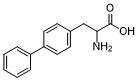
SC-10914 (SC10914) is a novel and highly potent PARP inhibitor (IC50 = 7.87 nM) with anticancer activity. It has favorabler pharmacokinetic profiles and thus has the potential to be used for the treatment of treatment of BRCA1/2 deficient cancers.
Physicochemical Properties
| Molecular Formula | C15H15NO2 |
| Molecular Weight | 241.2851 |
| Exact Mass | 241.11 |
| Elemental Analysis | C, 74.67; H, 6.27; N, 5.81; O, 13.26 |
| CAS # | 76985-08-5 |
| Related CAS # | 76985-08-5;63024-23-7 (HCl);155760-02-4 (S-isomer);170080-13-4 (R-isomer); 63087-78-5 (S-isomer HCl); 2159063-18-8 (R-isomer HCl); |
| PubChem CID | 11161741 |
| Appearance | Solid powder |
| Density | 1.2±0.1 g/cm3 |
| Boiling Point | 428.6±40.0 °C at 760 mmHg |
| Flash Point | 213.0±27.3 °C |
| Vapour Pressure | 0.0±1.1 mmHg at 25°C |
| Index of Refraction | 1.608 |
| LogP | 2.87 |
| Hydrogen Bond Donor Count | 2 |
| Hydrogen Bond Acceptor Count | 3 |
| Rotatable Bond Count | 4 |
| Heavy Atom Count | 18 |
| Complexity | 266 |
| Defined Atom Stereocenter Count | 0 |
| SMILES | O([H])C(C([H])(C([H])([H])C1C([H])=C([H])C(C2C([H])=C([H])C([H])=C([H])C=2[H])=C([H])C=1[H])N([H])[H])=O |
| InChi Key | JCZLABDVDPYLRZ-UHFFFAOYSA-N |
| InChi Code | InChI=1S/C15H15NO2/c16-14(15(17)18)10-11-6-8-13(9-7-11)12-4-2-1-3-5-12/h1-9,14H,10,16H2,(H,17,18) |
| Chemical Name | 2-amino-3-(4-phenylphenyl)propanoic acid |
| Synonyms | SC-10914; SC 10914; SC10914; |
| HS Tariff Code | 2934.99.9001 |
| Storage |
Powder-20°C 3 years 4°C 2 years In solvent -80°C 6 months -20°C 1 month |
| Shipping Condition | Room temperature (This product is stable at ambient temperature for a few days during ordinary shipping and time spent in Customs) |
Biological Activity
| ln Vivo | SC10914 is a highly potent PARP inhibitor (PARP1 IC50 = 7.87 nM) with potent anti-proliferative activity against human BRCA deficient tumor cells (MDA-MB-436, BRCA1 deficient, IC50 = 4.03 nM, Capan-1 BRCA2 deficient, IC50 = 11.66 nM) and PTEN deficient tumor cells (HGC-27,PTEN deficient, IC50 = 0.35 μM).[1] |
| Animal Protocol | Fragments of MDA-MB-436 tumor (approximately 1.5mm3) were implanted into the flank of female BALB/cA nude-mice which were randomized into four groups. Oral treatment with vehicle only, AZD2281 (75 mg/kg qd), SC10914 (25 mg/kg qd) or SC10914 (75 mg/kg qd) were carried out for 21 days. Vc8 xenograft was derived from Chinese hamster Vc8 (BRCA2 deficient) cells, fragments of Vc8 tumor (approximately 1.5mm3) were implanted into the flank of female BALB/cA nude-mice which were randomized into four groups; oral treatment with vehicle only, SC10914 (75 mg/kg qd), SC10914 (25 mg/kg qd) or SC10914 (5 mg/kg qd) were carried out for 21 days. SC10914 showed convincing in vivo efficacy at tolerated doses and resulted in robust dose-dependent anti-tumor efficacy in two xenograft models in nude-mice. Once daily oral treatment of SC10914 led to completed tumor stasis in established MDA-MB-436 xenografts and Vc-8 xenografts. In MDA-MB-436 xenografts, the low dose group (25mg/Kg) had the same efficacy with AZD2281 control group (75mg/Kg). SC10914 displayed a better pharmacokinetics profile compared with AZD2281 on SD rats with a single dosage of 15mg/Kg (oral bioavailability (%): 45.6% vs 26.2%, AUCinf (ng/mL/h): 3123 vs 1721, T1/2 (min): 160 vs 63.6). The pharmacokinetics profile displayed a positive correlation between the dosage of SC10914, drug plasma exposure (AUC0-t) and peak concentration (Cmax) when the dosages were in the range of 40-400mg/Kg. SC10914 has no hERG inhibition (IC50 > 30 μM). Ames tests suggested SC10914 has no mutagenic effects which were carried out in Salmonella typhimurium strains TA98 and TA100. |
| References | https://cancerres.aacrjournals.org/content/75/15_Supplement/3655 |
Solubility Data
| Solubility (In Vitro) | May dissolve in DMSO (in most cases), if not, try other solvents such as H2O, Ethanol, or DMF with a minute amount of products to avoid loss of samples |
| Solubility (In Vivo) |
Note: Listed below are some common formulations that may be used to formulate products with low water solubility (e.g. < 1 mg/mL), you may test these formulations using a minute amount of products to avoid loss of samples. Injection Formulations (e.g. IP/IV/IM/SC) Injection Formulation 1: DMSO : Tween 80: Saline = 10 : 5 : 85 (i.e. 100 μL DMSO stock solution → 50 μL Tween 80 → 850 μL Saline) *Preparation of saline: Dissolve 0.9 g of sodium chloride in 100 mL ddH ₂ O to obtain a clear solution. Injection Formulation 2: DMSO : PEG300 :Tween 80 : Saline = 10 : 40 : 5 : 45 (i.e. 100 μL DMSO → 400 μLPEG300 → 50 μL Tween 80 → 450 μL Saline) Injection Formulation 3: DMSO : Corn oil = 10 : 90 (i.e. 100 μL DMSO → 900 μL Corn oil) Example: Take the Injection Formulation 3 (DMSO : Corn oil = 10 : 90) as an example, if 1 mL of 2.5 mg/mL working solution is to be prepared, you can take 100 μL 25 mg/mL DMSO stock solution and add to 900 μL corn oil, mix well to obtain a clear or suspension solution (2.5 mg/mL, ready for use in animals). Injection Formulation 4: DMSO : 20% SBE-β-CD in saline = 10 : 90 [i.e. 100 μL DMSO → 900 μL (20% SBE-β-CD in saline)] *Preparation of 20% SBE-β-CD in Saline (4°C,1 week): Dissolve 2 g SBE-β-CD in 10 mL saline to obtain a clear solution. Injection Formulation 5: 2-Hydroxypropyl-β-cyclodextrin : Saline = 50 : 50 (i.e. 500 μL 2-Hydroxypropyl-β-cyclodextrin → 500 μL Saline) Injection Formulation 6: DMSO : PEG300 : castor oil : Saline = 5 : 10 : 20 : 65 (i.e. 50 μL DMSO → 100 μLPEG300 → 200 μL castor oil → 650 μL Saline) Injection Formulation 7: Ethanol : Cremophor : Saline = 10: 10 : 80 (i.e. 100 μL Ethanol → 100 μL Cremophor → 800 μL Saline) Injection Formulation 8: Dissolve in Cremophor/Ethanol (50 : 50), then diluted by Saline Injection Formulation 9: EtOH : Corn oil = 10 : 90 (i.e. 100 μL EtOH → 900 μL Corn oil) Injection Formulation 10: EtOH : PEG300:Tween 80 : Saline = 10 : 40 : 5 : 45 (i.e. 100 μL EtOH → 400 μLPEG300 → 50 μL Tween 80 → 450 μL Saline) Oral Formulations Oral Formulation 1: Suspend in 0.5% CMC Na (carboxymethylcellulose sodium) Oral Formulation 2: Suspend in 0.5% Carboxymethyl cellulose Example: Take the Oral Formulation 1 (Suspend in 0.5% CMC Na) as an example, if 100 mL of 2.5 mg/mL working solution is to be prepared, you can first prepare 0.5% CMC Na solution by measuring 0.5 g CMC Na and dissolve it in 100 mL ddH2O to obtain a clear solution; then add 250 mg of the product to 100 mL 0.5% CMC Na solution, to make the suspension solution (2.5 mg/mL, ready for use in animals). Oral Formulation 3: Dissolved in PEG400 Oral Formulation 4: Suspend in 0.2% Carboxymethyl cellulose Oral Formulation 5: Dissolve in 0.25% Tween 80 and 0.5% Carboxymethyl cellulose Oral Formulation 6: Mixing with food powders Note: Please be aware that the above formulations are for reference only. InvivoChem strongly recommends customers to read literature methods/protocols carefully before determining which formulation you should use for in vivo studies, as different compounds have different solubility properties and have to be formulated differently. (Please use freshly prepared in vivo formulations for optimal results.) |
| Preparing Stock Solutions | 1 mg | 5 mg | 10 mg | |
| 1 mM | 4.1444 mL | 20.7220 mL | 41.4439 mL | |
| 5 mM | 0.8289 mL | 4.1444 mL | 8.2888 mL | |
| 10 mM | 0.4144 mL | 2.0722 mL | 4.1444 mL |