Physicochemical Properties
| Molecular Formula | C13H11N5O3 |
| Molecular Weight | 285.2581 |
| Exact Mass | 285.086 |
| CAS # | 1414963-82-8 |
| PubChem CID | 71618700 |
| Appearance | White to off-white solid powder |
| LogP | 2.51 |
| Hydrogen Bond Donor Count | 2 |
| Hydrogen Bond Acceptor Count | 6 |
| Rotatable Bond Count | 4 |
| Heavy Atom Count | 21 |
| Complexity | 357 |
| Defined Atom Stereocenter Count | 0 |
| InChi Key | FNSCFQXZZNCDAI-UHFFFAOYSA-N |
| InChi Code | InChI=1S/C13H11N5O3/c19-12(15-8-9-4-1-2-6-14-9)16-13-18-17-11(21-13)10-5-3-7-20-10/h1-7H,8H2,(H2,15,16,18,19) |
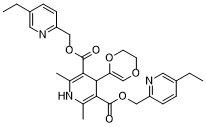
| Chemical Name | 1-[5-(furan-2-yl)-1,3,4-oxadiazol-2-yl]-3-(pyridin-2-ylmethyl)urea |
| HS Tariff Code | 2934.99.9001 |
| Storage |
Powder-20°C 3 years 4°C 2 years In solvent -80°C 6 months -20°C 1 month |
| Shipping Condition | Room temperature (This product is stable at ambient temperature for a few days during ordinary shipping and time spent in Customs) |
Biological Activity
| ln Vitro | The Huh-7.5 cells treated with oltipraz (OPZ) or NK-252 exhibited dose-dependent activation of NAD (P) H quinone oxidoreductase 1 (NQO1)-ARE as evidenced by luciferase activity. Based on the fact that NK-252 exhibits a higher potency for this effect than OPZ, NK-252's EC2 value (concentration induced by two times above background) is 1.36 μM, while OPZ's is 20.8 μM, determined by linearly extrapolating values above and below the induction threshold. NK-252 may function in hepatocytes as a Nrf2 activator. It has been documented that prototypic Nrf2 activators, such as OPZ, shield microglia from the cytotoxicity caused by H2O2. Huh-7 cells were used to assess the antioxidant qualities of OPZ and NK-252 in relation to their ability to protect against H2O2-induced cytotoxicity. When OPZ or NK-252 are applied to cells, they enhance their resistance against H2O2-induced cytotoxicity in comparison to control cells [1]. |
| ln Vivo | When compared to CDAA control rats, animals on a choline-deficient L-amino acid-defining (CDAA) diet administered OPZ or NK-252 had lower fibrosis scores, with a median score of 3, indicating bridging fibrosis. When compared to rats fed a normal control diet (naïve), the liver fibrosis area in CDAA control rats was nearly 20 times larger (14.7 vs. 0.72%, respectively). by giving either NK-252 or OPZ (5.80% of NK-252_high, 6.20% of NK-252_low, and 4.97% of OPZ). Dose-dependent effects of NK-252 are observed on fibrosis area and score [1]. P388/S and P388/VCR mice showed no anticancer effect from NK-252 alone. When NK-252 was given orally in addition to Etoposide, the mice that were intraperitoneally injected with P388/S lived much longer when compared to when Etoposide was used alone. When compared to the comparable survival time of Etoposide alone, the combined treatment of NK-252 and Etoposide considerably increased the lifespan of mice intraperitoneally vaccinated with P388/VCR [2]. |
| References |
[1]. Nrf2 activators attenuate the progression of nonalcoholic steatohepatitis-related fibrosis in a dietary rat model. Mol Pharmacol. 2013 Jul, 84(1):62-70. [2]. Enhancement of antitumour activity of etoposide by dihydropyridines on drug-sensitive and drug-resistant leukaemia in mice. Br J Cancer. 1991 Aug;64(2):221-6. |
| Additional Infomation | See also: NK 252 (annotation moved to). |
Solubility Data
| Solubility (In Vitro) | DMSO : ≥ 29 mg/mL (~101.66 mM) |
| Solubility (In Vivo) |
Solubility in Formulation 1: ≥ 2.08 mg/mL (7.29 mM) (saturation unknown) in 10% DMSO + 40% PEG300 + 5% Tween80 + 45% Saline (add these co-solvents sequentially from left to right, and one by one), clear solution. For example, if 1 mL of working solution is to be prepared, you can add 100 μL of 20.8 mg/mL clear DMSO stock solution to 400 μL PEG300 and mix evenly; then add 50 μL Tween-80 to the above solution and mix evenly; then add 450 μL normal saline to adjust the volume to 1 mL. Preparation of saline: Dissolve 0.9 g of sodium chloride in 100 mL ddH₂ O to obtain a clear solution. Solubility in Formulation 2: ≥ 2.08 mg/mL (7.29 mM) (saturation unknown) in 10% DMSO + 90% (20% SBE-β-CD in Saline) (add these co-solvents sequentially from left to right, and one by one), clear solution. For example, if 1 mL of working solution is to be prepared, you can add 100 μL of 20.8 mg/mL clear DMSO stock solution to 900 μL of 20% SBE-β-CD physiological saline solution and mix evenly. Preparation of 20% SBE-β-CD in Saline (4°C,1 week): Dissolve 2 g SBE-β-CD in 10 mL saline to obtain a clear solution. Solubility in Formulation 3: ≥ 2.08 mg/mL (7.29 mM) (saturation unknown) in 10% DMSO + 90% Corn Oil (add these co-solvents sequentially from left to right, and one by one), clear solution. For example, if 1 mL of working solution is to be prepared, you can add 100 μL of 20.8 mg/mL clear DMSO stock solution to 900 μL of corn oil and mix evenly. (Please use freshly prepared in vivo formulations for optimal results.) |
| Preparing Stock Solutions | 1 mg | 5 mg | 10 mg | |
| 1 mM | 3.5056 mL | 17.5279 mL | 35.0557 mL | |
| 5 mM | 0.7011 mL | 3.5056 mL | 7.0111 mL | |
| 10 mM | 0.3506 mL | 1.7528 mL | 3.5056 mL |