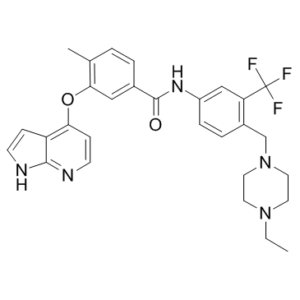
NG25 is a novel, potent and synthesized dual TAK1 (TGFβ-activated kinase 1) and MAP4K2 (mitogen-activated protein kinase kinase kinase kinase 2) inhibitor, with IC50s of 149 nM and 21.7 nM, respectively. The important intracellular molecule TGFβ-activated kinase-1 (TAK1) is involved in the activation of NF-κB caused by genotoxic stress. A number of malignancies have been studied to determine the effectiveness of treatment when TAK1 is targeted. A panel of breast cancer cell lines treated with Dox and NG25 showed significantly improved therapeutic efficacy. In this pre-clinical study, NG25 increased Dox-induced cytotoxicity and apoptosis in all tested breast cancer cell lines while enhancing Dox-induced p38 phosphorylation and I-B degradation in some cases. Together, our findings demonstrated conclusively that NG25 sensitizes breast cancer cells to Dox treatment in vitro. This combination may be a viable and effective therapeutic option for treating breast cancer by increasing Dox efficacy while minimizing Dox side effects.
Physicochemical Properties
| Molecular Formula | C29H30F3N5O2 |
| Molecular Weight | 537.5760 |
| Exact Mass | 537.235 |
| Elemental Analysis | C, 64.79; H, 5.63; F, 10.60; N, 13.03; O, 5.95 |
| CAS # | 1315355-93-1 |
| Related CAS # | NG25 trihydrochloride;2108554-00-1 |
| PubChem CID | 53340664 |
| Appearance | White to off-white solid powder |
| LogP | 6.332 |
| Hydrogen Bond Donor Count | 2 |
| Hydrogen Bond Acceptor Count | 8 |
| Rotatable Bond Count | 7 |
| Heavy Atom Count | 39 |
| Complexity | 808 |
| Defined Atom Stereocenter Count | 0 |
| SMILES | FC(C1C([H])=C(C([H])=C([H])C=1C([H])([H])N1C([H])([H])C([H])([H])N(C([H])([H])C([H])([H])[H])C([H])([H])C1([H])[H])N([H])C(C1C([H])=C([H])C(C([H])([H])[H])=C(C=1[H])OC1C([H])=C([H])N=C2C=1C([H])=C([H])N2[H])=O)(F)F |
| InChi Key | SMPGEBOIKULBCT-UHFFFAOYSA-N |
| InChi Code | InChI=1S/C29H30F3N5O2/c1-3-36-12-14-37(15-13-36)18-21-6-7-22(17-24(21)29(30,31)32)35-28(38)20-5-4-19(2)26(16-20)39-25-9-11-34-27-23(25)8-10-33-27/h4-11,16-17H,3,12-15,18H2,1-2H3,(H,33,34)(H,35,38) |
| Chemical Name | N-[4-[(4-ethylpiperazin-1-yl)methyl]-3-(trifluoromethyl)phenyl]-4-methyl-3-(1H-pyrrolo[2,3-b]pyridin-4-yloxy)benzamide |
| Synonyms | NG25; NG-25; NG 25 |
| HS Tariff Code | 2934.99.9001 |
| Storage |
Powder-20°C 3 years 4°C 2 years In solvent -80°C 6 months -20°C 1 month |
| Shipping Condition | Room temperature (This product is stable at ambient temperature for a few days during ordinary shipping and time spent in Customs) |
Biological Activity
| Targets | MAP4K2 (IC50 = 21.7 nM); TAK1 (IC50 = 149 nM); LYN (IC50 = 12.9 nM); GSK (IC50 = 56.4 nM); ABL,ARG (IC50 = 75.2 nM); FER (IC50 = 82.3 nM); SRC (IC50 = 113 nM); Eph B2 (IC50 = 672 nM); ZAK (IC50 = 698 nM); Eph A2 (IC50 = 773 nM); Eph B4 (IC50 = 999 nM); ZC1/HGK (IC50 = 3250 nM); RAF1 (IC50 = 7590 nM) |
| ln Vitro | NG25 is a potent dual TAK1 and MAP4K2 inhibitor, with IC50s of 149 nM and 21.7 nM, respectively. Additionally, NG25 effectively inhibits a number of kinases, including LYN, CSK, FER, p38α, ABL, ARG, and SRC, with respective IC50 values of 12.9, 56.4, 82.3, 102, 75.2, and 113 nM[1]. NG25 completely inhibits the secretion of IFNα and IFNβ when stimulated by CL097 or CpG B or A, respectively[2]. All tested breast cancer cell lines experience a dose-dependent reduction in cell viability after NG25 treatment. The cytotoxic effect of Dox on breast cancer cells is enhanced by NG25 (2 μM)[3]. |
| Enzyme Assay | IRF7 is produced in Escherichia coli as a fusion protein with the enzyme glutathione S-transferase (GST), which is broken down by the enzyme PreScission proteinase. IRF7 is released from GST and glutathione-Sepharose by PreScission proteinase digestion, and GST-IRF7 is captured on glutathione-Sepharose. Insect Sf21 cells express His6-tagged forms of IKKβ and TBK1 that have been phosphorylated to become active, and these purified forms are then used in nickel nitrilotriacetate-agarose affinity chromatography. The Millipore company sells active GST-IKKα, which is then tested. |
| Cell Assay | In 96-well plates, 3.5×10⁵ Gen 2.2 cells or Flt3-DCs are incubated for 1 hour without or with the indicated concentrations of the inhibitor. They are then stimulated with 1 M CpG (type A or B), 1 μg/mL of CL097, or 1 μg/mL of R848. The cell culture supernatants are collected after 5 or 12 hours, clarified by centrifugation, and stored at 80°C pending cytokine level analysis. Unstimulated cells are incubated for 12 hours, either in the absence or presence of inhibitors, for cell viability assays. Following cell fixation, flow cytometry is used to determine the percentage of living cells. |
| Animal Protocol |
Male Swiss albino mice 1 mg/kg i.v. or o.g. |
| References |
[1]. Discovery of type II inhibitors of TGFβ-activated kinase 1 (TAK1) and mitogen-activated protein kinase kinase kinase kinase 2 (MAP4K2). J Med Chem. 2015 Jan 8;58(1):183-96. [2]. Essential role for IKKβ in production of type 1 interferons by plasmacytoid dendritic cells. J Biol Chem. 2012 Jun 1;287(23):19216-28. [3]. TAK1 inhibitor NG25 enhances doxorubicin-mediated apoptosis in breast cancer cells. Sci Rep. 2016 Sep 7;6:32737. |
Solubility Data
| Solubility (In Vitro) |
DMSO: 16.7~25 mg/mL (31.0~46.1 mM) Ethanol: ~3 mg/mL (~5.6 mM) |
| Solubility (In Vivo) |
Solubility in Formulation 1: ≥ 2.5 mg/mL (4.65 mM) (saturation unknown) in 10% DMSO + 40% PEG300 + 5% Tween80 + 45% Saline (add these co-solvents sequentially from left to right, and one by one), clear solution. For example, if 1 mL of working solution is to be prepared, you can add 100 μL of 25.0 mg/mL clear DMSO stock solution to 400 μL PEG300 and mix evenly; then add 50 μL Tween-80 to the above solution and mix evenly; then add 450 μL normal saline to adjust the volume to 1 mL. Preparation of saline: Dissolve 0.9 g of sodium chloride in 100 mL ddH₂ O to obtain a clear solution. Solubility in Formulation 2: 2.5 mg/mL (4.65 mM) in 10% DMSO + 90% (20% SBE-β-CD in Saline) (add these co-solvents sequentially from left to right, and one by one), suspension solution; with ultrasonication. For example, if 1 mL of working solution is to be prepared, you can add 100 μL of 25.0 mg/mL clear DMSO stock solution to 900 μL of 20% SBE-β-CD physiological saline solution and mix evenly. Preparation of 20% SBE-β-CD in Saline (4°C,1 week): Dissolve 2 g SBE-β-CD in 10 mL saline to obtain a clear solution. Solubility in Formulation 3: ≥ 2.5 mg/mL (4.65 mM) (saturation unknown) in 10% DMSO + 90% Corn Oil (add these co-solvents sequentially from left to right, and one by one), clear solution. For example, if 1 mL of working solution is to be prepared, you can add 100 μL of 25.0 mg/mL clear DMSO stock solution to 900 μL of corn oil and mix evenly. (Please use freshly prepared in vivo formulations for optimal results.) |
| Preparing Stock Solutions | 1 mg | 5 mg | 10 mg | |
| 1 mM | 1.8602 mL | 9.3009 mL | 18.6019 mL | |
| 5 mM | 0.3720 mL | 1.8602 mL | 3.7204 mL | |
| 10 mM | 0.1860 mL | 0.9301 mL | 1.8602 mL |