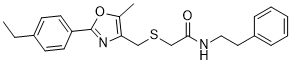
iCRT3 (iCRT-3) is an inhibitor of Wnt and β-catenin-responsive transcription in the Wnt/wingless signaling pathway with anticancer activity. It exhibits IC50 of 8.2 nM in the Wnt responsive STF16-luc reporter assays. iCRT3 can efficiently block Wnt/β-catenin-induced target genes and phenotypes in various mammalian and cancer cell lines. Importantly, these Wnt inhibitors are specifically cytotoxic to human colon tumor biopsy cultures as well as colon cancer cell lines that exhibit deregulated Wnt signaling. iCRT3 binds to β-catenin and interferes with its interaction with TCF. iCRT3 significantly reduces the LPS-induced Wnt/β-catenin activity and also inhibits TNF-α production and IκB degradation in a dose-dependent manner.
Physicochemical Properties
| Molecular Formula | C23H26N2O2S | |
| Molecular Weight | 394.53 | |
| Exact Mass | 394.171 | |
| Elemental Analysis | C, 70.02; H, 6.64; N, 7.10; O, 8.11; S, 8.13 | |
| CAS # | 901751-47-1 | |
| Related CAS # |
|
|
| PubChem CID | 6622273 | |
| Appearance | White to off-white solid powder | |
| LogP | 5.195 | |
| Hydrogen Bond Donor Count | 1 | |
| Hydrogen Bond Acceptor Count | 4 | |
| Rotatable Bond Count | 9 | |
| Heavy Atom Count | 28 | |
| Complexity | 462 | |
| Defined Atom Stereocenter Count | 0 | |
| InChi Key | QTDYVSIBWGVBKU-UHFFFAOYSA-N | |
| InChi Code | InChI=1S/C23H26N2O2S/c1-3-18-9-11-20(12-10-18)23-25-21(17(2)27-23)15-28-16-22(26)24-14-13-19-7-5-4-6-8-19/h4-12H,3,13-16H2,1-2H3,(H,24,26) | |
| Chemical Name |
|
|
| Synonyms |
|
|
| HS Tariff Code | 2934.99.9001 | |
| Storage |
Powder-20°C 3 years 4°C 2 years In solvent -80°C 6 months -20°C 1 month |
|
| Shipping Condition | Room temperature (This product is stable at ambient temperature for a few days during ordinary shipping and time spent in Customs) |
Biological Activity
| Targets |
β-catenin-responsive transcription (CRT)
The target of iCRT3 is the β-catenin/T-cell factor (TCF) complex, specifically inhibiting the interaction between β-catenin and TCF1; [2] The target of iCRT3 is the Wnt/β-catenin signaling pathway, acting as a small-molecule inhibitor of β-catenin-responsive transcription; [3] The target of iCRT3 is the Wnt/β-catenin signaling pathway; [1] |
| ln Vitro |
iCRT3 inhibits transcription that is sensitive to both Wnt and β-catenin. Both TOP Flash activity and NTSR1 level are markedly lowered by iCRT3. iCRT3 can significantly counteract the anti-apoptotic effects of neurotensin (NTS) and Wnt3a[1]. Long-term iCRT3-maintained cells exhibit increased expression of classic pluripotency compared to the DMSO control, but concurrently decreased expression of differentiation markers and T-cell factor (TCF) target genes[2]. iCRT3 treatment reduces TNF-α levels by 14.7%, 18.5%, 44.9%, and 61.3% at dosages of 12.5, 25, 50, and 75 μM, respectively. IκB levels rise dose-dependently with iCRT3 therapy in contrast to the vehicle[3]. 1. Inhibition of Wnt/β-catenin signaling in glioblastoma cells: Pharmacological inhibition of iCRT3 on the Wnt/β-catenin pathway reduced the mRNA and protein expression levels of NTSR1 in glioblastoma cells [1] 2. Inhibition of β-catenin/TCF1 interaction in mouse embryonic stem cells (mESCs): iCRT3 specifically inhibited the interaction between β-catenin and TCF1 without affecting the binding of β-catenin to TCF3. This inhibition reduced the transcriptional activity of TCF-dependent target genes (e.g., Cdx1, Axin2) and delayed mESC differentiation. Treatment with iCRT3 for 14 days enhanced the self-renewal ability of mESCs, maintaining higher Nanog and Rex1 expression, and reducing spontaneous differentiation. In RA-induced differentiation models, iCRT3 enabled mESCs to resist differentiation, increasing the proportion of Nanog-GFP-positive cells and enhancing colony-forming efficiency. Additionally, iCRT3 increased the formation of the β-catenin/Oct4 complex, which is associated with ground-state pluripotency [2] 3. Regulation of inflammatory responses in LPS-stimulated RAW264.7 macrophages: iCRT3 pre-treated (for 50 min) RAW264.7 macrophages at different concentrations, followed by LPS (1 ng/ml) stimulation. It dose-dependently inhibited LPS-induced Wnt/β-catenin pathway activation (measured by TOP-TK-Luc reporter activity) and TNF-α production (detected by ELISA). iCRT3 also dose-dependently suppressed LPS-induced IκB degradation (analyzed by Western blotting) without affecting cell viability (determined by MTS assay, with viability maintained at 100% compared to untreated cells) [3] |
| ln Vivo |
Treatment with iCRT3 significantly reduces tumor growth rates. The tumor-suppressive function of iCRT3 is consistently correlated with a decrease in the proliferation marker Ki67 index[1]. Compared to the vehicle group, the IL-6 levels in the 10 mg/kg iCRT3 therapy group are 82.9% lower. In the sham, IL-1β levels are not detectable; however, in septic mice, they reach 371 pg/mL and decrease by 30.2% and 53.2%, respectively, when given 5 and 10 mg/kg iCRT3. The AST levels of these septic mice treated with iCRT3 at doses of 5 and 10 mg/kg are, respectively, 15.4% and 44.2% lower than those of the animals treated with vehicle. In comparison to the vehicle group, lung morphology improves with much less microscopic degradation following therapy with 10 mg/kg iCRT3. When comparing the lung tissues of the iCRT3-treated animals to the vehicle group, there are 92.7% fewer apoptotic cells[3]. 1. Inhibition of tumor growth in glioblastoma models: Pharmacological inhibition of the Wnt/β-catenin signaling pathway by iCRT3 suppressed tumor growth in glioblastoma in vivo [1] 2. Mitigation of sepsis-induced inflammatory responses and organ injury in C57BL/6 mice: Male C57BL/6 mice were subjected to cecal ligation and puncture (CLP)-induced sepsis, followed by intraperitoneal injection of iCRT3 (5 mg/kg or 10 mg/kg body weight) at 5 h post-CLP. At 20 h post-CLP, iCRT3 dose-dependently reduced plasma levels of proinflammatory cytokines (IL-6, TNF-α, IL-1β) and organ injury markers (AST, ALT, LDH). Histological analysis showed that iCRT3 (10 mg/kg) improved lung tissue integrity, reduced lung injury scores, decreased lung collagen deposition (stained by Masson’s Trichrome), and inhibited lung cell apoptosis (detected by TUNEL staining). Additionally, iCRT3 downregulated the mRNA expression of IL-6, TNF-α, IL-1β, neutrophil chemoattractants (MIP-2, KC) in lung tissues, and reduced lung myeloperoxidase (MPO) activity, thereby alleviating neutrophil infiltration [3] |
| Enzyme Assay |
β-catenin-TCF reporter activity assay[3] RAW264.7 cells were seeded the day before transfection at a density of 1.24 × 10⁵ cells per ml. Cells were transiently co-transfected with 250 ng of TOP-TK-Luc or FOP-TK-Luc and 25 ng pRL-TK reporter plasmids, using the Lipofectamine 3000 Reagent according to the manufacturer’s instructions. At 24 h after transfection, cells were pre-treated with iCRT3 or vehicle for 50 min and then stimulated with LPS (1 ng/ml) for another 24 h. The cells were lysed 48 h post-transfection and luciferase activity was measured with a Dual-Luciferase reporter assay system according to the manufacturer’s instructions. TOP-TK-Luc contains optimal and FOP-TK-Luc contains mutated TCF-binding sites placed upstream of a firefly luciferase reporter gene. The TOP and FOP firefly luciferase activity was normalized to Renilla luciferase activity from the cotransfected pRL-TK plasmid used as an internal control for transfection efficiency. All experiments were performed in triplicate at least twice. |
| Cell Assay |
Luciferase reporter assay[1] Cells were plated at 4 × 10⁵ cells/wells in 24-well plates and transiently transfected with the TopFlash (0.5 µg) and the Renilla reporter (0.05 µg) using Lipofectamine 2000. The NTS, Wnt3a, SR48692 and iCRT3 treatment were added to A172 or U87 cells for 24 h after plating. The cells were harvested and luciferase activity was measured two days after transfection. The luciferase activity was measured by using the Dual Luciferase Reporter Assay System. Cell proliferation and cell apoptosis assay[1] Cells were seeded into 96-well plates to a density of 5 × 10³ cells per well and incubated in the culture medium with indicated treatment for an additional 48 h. Cell viability and cell apoptosis assays were carried out using a Cell Counting kit-8 and a Caspase-Glo 3/7 assay kit according to the manufacturer’s instructions, respectively. For long-term cultures, cells were plated in limiting dilutions in 6- or 96-well plates for multiple passages (14 d) in stem conditions (serum plus LIF) with DMSO or iCRT3, with daily media changes. AP staining was performed for every passage to monitor the relative pluripotency levels. Small molecules used include 10 µM iCRT3 and 1 µM XAV939, which were diluted with DMSO. L-Wnt3a and control L cells were gifts from R.T. Moon. [2] 1. Glioblastoma cell experiment: Glioblastoma cells were treated with iCRT3 (concentration not specified) to inhibit the Wnt/β-catenin pathway. After treatment, total RNA and protein were extracted from the cells. qPCR was used to detect the mRNA expression level of NTSR1, and Western blotting was used to analyze the protein expression level of NTSR1 [1] 2. Mouse embryonic stem cell (mESC) experiments: - β-catenin/TCF transcriptional activity assay: mESCs (NG4-TOPluc) were transfected with TOPFlash reporter plasmid and internal control pRL-TK plasmid. After transfection, cells were treated with iCRT3 (concentration not specified) and cultured in serum plus LIF (S+LIF) or serum plus RA (S+RA) medium. Luciferase activity was measured to evaluate the inhibitory effect on β-catenin/TCF-dependent transcriptional activity [2] - Flow cytometry analysis: TNGA (Nanog reporter) and Rex1-GFP mESCs were treated with iCRT3 for 14 days in S+LIF medium. Flow cytometry was used to detect the expression levels of Nanog-GFP and Rex1-GFP to assess self-renewal ability. For differentiation resistance experiments, mESCs were treated with iCRT3 for 6 days without LIF or for 48 h with RA, and flow cytometry was used to analyze the proportion of Nanog-GFP-positive cells [2] - qPCR analysis: mESCs treated with iCRT3 for four passages or during RA-induced differentiation were collected. Total RNA was extracted and reverse-transcribed into cDNA. qPCR was performed to detect the mRNA expression levels of pluripotency markers (Nanog, Oct4, Sox2), differentiation markers, and TCF target genes (Cdx1, Axin2) with actin as an internal reference [2] - Colony-forming efficiency (CFE) assay: mESCs were pre-cultured with RA plus iCRT3 or DMSO for 48 h, then plated in limiting dilutions in S+LIF medium without inhibitors and cultured for another 48 h. The number of colonies, colony area, and alkaline phosphatase (AP) activity were quantified to evaluate colony-forming efficiency [2] - Co-immunoprecipitation (CoIP) assay: Total cell lysates of mESCs treated with iCRT3 during RA-induced differentiation were prepared. Antibodies against β-catenin, TCF1, and TCF3 were used for CoIP experiments to detect the interaction between β-catenin and TCF1/TCF3. Western blotting was used for detection and densitometric analysis [2] 3. RAW264.7 macrophage experiments: - Reporter gene assay: RAW264.7 cells were co-transfected with β-catenin/TCF response reporter TOP-TK-Luc (or control FOP-TK-Luc) and internal control pRL-TK. After transfection, cells were pre-treated with iCRT3 at different concentrations for 50 min, then stimulated with LPS (1 ng/ml) for 24 h. Luciferase activity was measured to assess Wnt/β-catenin pathway activation [3] - TNF-α ELISA assay: RAW264.7 cells were pre-treated with iCRT3 at different concentrations for 50 min, then stimulated with LPS (1 ng/ml) for 4 h. Cell supernatants were collected, and TNF-α levels were measured by ELISA [3] - MTS cell viability assay: RAW264.7 cells were treated with iCRT3 at different concentrations, and cell viability was detected by MTS assay, with the viability of untreated cells set as 100% [3] - Western blotting for IκB: RAW264.7 cells were pre-treated with iCRT3 at different concentrations for 50 min, then stimulated with LPS (1 ng/ml) for 15 min. Total cell lysates were prepared, and Western blotting was performed using antibodies against IκB and actin to detect IκB degradation [3] |
| Animal Protocol |
Dissolved in 5% DMSO in saline; 5 and 10 mg/kg; i.p. C57BL/6 mice A172 cells were used to establish a subcutaneous xenograft and to determine the anti-tumor effects of SR48692 and iCRT3. NOD-SCID BALB/c mice were inoculated subcutaneously in the right back with 2 × 10⁶ A172 cells. The growth of the primary tumors was recorded every 4 days. SR48692 (10 mg/kg) and iCRT3 (5 mg/kg) was diluted in PBS i.p. triweekly when tumors grew to ∼200 mm3. The control mice were treated with blank PBS containing 5% (v/v) DMSO. Tumor volume was evaluated with the following formula: volume = tumor length × width2/2. The mice were sacrificed 24 days after pharmaceutical treatment. The tumors were resected and embedded in paraffin, and the Ki67 staining was analyzed by immunohistochemistry.[1] Mice were randomly allocated to three groups: sham (n = 5 mice), vehicle and treatment (n = 8 mice per group). iCRT3 was reconstituted with cell culture grade 100% DMSO as 50 mg/ml stock. 5 and 10 mg/kg body weight (BW) concentrations of iCRT3 were made by diluting stock in sterile normal saline with 5% DMSO. At 5 h after CLP, 5% DMSO in normal saline (vehicle) or iCRT3 at 5 or 10 mg/kg BW doses in 200 μl volume was delivered by intraperitoneal injection using 25 G × 7/8″ hypodermic needle. The investigator performing the animal experiments was blinded to the treatment assignment to eliminate any bias.[3] 1. Glioblastoma in vivo experiment: Specific details such as animal model establishment (e.g., cell inoculation method, number of cells), iCRT3 dosage, administration route, and frequency were not explicitly stated. Pharmacological inhibition of the Wnt/β-catenin pathway by iCRT3 was used to observe the inhibitory effect on tumor growth [1] 2. Sepsis model experiment in C57BL/6 mice: - Animal preparation: Male C57BL/6 mice were selected as experimental animals and randomly divided into sham-operated group, CLP + vehicle group, and CLP + iCRT3 treatment group (5 mg/kg and 10 mg/kg body weight, n = 5–8 mice per group) [3] - Sepsis model establishment: Mice in the CLP groups were subjected to cecal ligation and puncture to induce sepsis, while the sham-operated group only underwent laparotomy without cecal ligation and puncture [3] - Drug administration: At 5 h after CLP, mice in the treatment groups were intraperitoneally injected with iCRT3 dissolved in 5% DMSO in normal saline at the specified doses. Mice in the vehicle group were injected with the same volume of 5% DMSO in normal saline [3] - Sample collection and detection: At 20 h after CLP, blood samples were collected from mice to detect plasma cytokine levels and organ injury markers. Lung tissues were harvested for histological analysis (H&E staining, Masson’s Trichrome staining), TUNEL staining, qPCR analysis of cytokine and chemokine mRNA expression, and MPO activity detection [3] |
| References |
[1]. A Novel Positive Feedback Loop Between NTSR1 and Wnt/β-Catenin Contributes to Tumor Growth of Glioblastoma. Cell Physiol Biochem. 2017 Oct 24;43(5):2133-2142. [2]. Inhibition of β-catenin-TCF1 interaction delays differentiation of mouse embryonic stem cells. J Cell Biol. 2015 Oct 12;211(1):39-51. [3]. Mitigation of sepsis-induced inflammatory responses and organ injury through targeting Wnt/β-catenin signaling. doi: 10.1038/s41598-017-08711-6. |
| Additional Infomation |
Background/aims: Neurotensin (NTS), an intestinal hormone, is profoundly implicated in cancer progression through binding its primary receptor NTSR1. The conserved Wnt/β-Catenin pathway regulates cell proliferation and differentiation via activation of the β-catenin/T-cell factor (TCF) complex and subsequent modulation of a set of target genes. In this study, we aimed to uncover the potential connection between NTS/NTSR1 signaling and Wnt/β-Catenin pathway.\n\nMethods: Genetic silencing, pharmacological inhibition and gain-of-function studies as well as bioinformatic analysis were performed to uncover the link between NTS/ NTSR1 signaling and Wnt/β-Catenin pathway. Two inhibitors were used in vivo to evaluate the efficiency of targeting NTS/NTSR1 signaling or Wnt/β-Catenin pathway.\n\nResults: We found that NTS/NTSR1 induced the activation of mitogen-activated protein kinase (MAPK) and the NF-κB pathway, which further promoted the expression of Wnt proteins, including Wnt1, Wnt3a and Wnt5a. Meanwhile, the mRNA and protein expression levels of NTSR1 were increased by the Wnt pathway activator Wnt3a and decreased by the Wnt inhibitor iCRT3 in glioblastoma cells. Furthermore, pharmacological inhibition of NTS/NTSR1 or Wnt/β-Catenin signaling suppressed tumor growth in vitro and in vivo.\n\nConclusion: These results reveal a positive feedback loop between NTS/NTSR1 and Wnt/β-Catenin signaling in glioblastoma cells that might be important for tumor development and provide potential therapeutic targets for glioblastoma.[1] \nThe ability of mouse embryonic stem cells (mESCs) to self-renew or differentiate into various cell lineages is regulated by signaling pathways and a core pluripotency transcriptional network (PTN) comprising Nanog, Oct4, and Sox2. The Wnt/β-catenin pathway promotes pluripotency by alleviating T cell factor TCF3-mediated repression of the PTN. However, it has remained unclear how β-catenin's function as a transcriptional activator with TCF1 influences mESC fate. Here, we show that TCF1-mediated transcription is up-regulated in differentiating mESCs and that chemical inhibition of β-catenin/TCF1 interaction improves long-term self-renewal and enhances functional pluripotency. Genetic loss of TCF1 inhibited differentiation by delaying exit from pluripotency and conferred a transcriptional profile strikingly reminiscent of self-renewing mESCs with high Nanog expression. Together, our data suggest that β-catenin's function in regulating mESCs is highly context specific and that its interaction with TCF1 promotes differentiation, further highlighting the need for understanding how its individual protein-protein interactions drive stem cell fate.\n\n[2] \n\nThe Wnt/β-catenin pathway has been involved in regulating inflammation in various infectious and inflammatory diseases. Sepsis is a life-threatening condition caused by dysregulated inflammatory response to infection with no effective therapy available. Recently elevated Wnt/β-catenin signaling has been detected in sepsis. However, its contribution to sepsis-associated inflammatory response remains to be explored. In this study, we show that inhibition of Wnt/β-catenin signaling reduces inflammation and mitigates sepsis-induced organ injury. Using in vitro LPS-stimulated RAW264.7 macrophages, we demonstrate that a small-molecule inhibitor of β-catenin responsive transcription, iCRT3, significantly reduces the LPS-induced Wnt/β-catenin activity and also inhibits TNF-α production and IκB degradation in a dose-dependent manner. Intraperitoneal administration of iCRT3 to C57BL/6 mice, subjected to cecal ligation and puncture-induced sepsis, decreases the plasma levels of proinflammatory cytokines and organ injury markers in a dose-dependent manner. The histological integrity of the lungs is improved with iCRT3 treatment, along with reduced lung collagen deposition and apoptosis. In addition, iCRT3 treatment also decreases the expression of the cytokines, neutrophil chemoattractants, as well as the MPO activity in the lungs of septic mice. Based on these findings we conclude that targeting the Wnt/β-Catenin pathway may provide a potential therapeutic approach for treatment of sepsis.[3]\n 1. Background: Neurotensin (NTS) binds to its primary receptor NTSR1 to promote cancer progression. The Wnt/β-catenin pathway regulates cell proliferation and differentiation by activating the β-catenin/TCF complex. There is a positive feedback loop between NTS/NTSR1 and Wnt/β-catenin signaling in glioblastoma cells, which is involved in tumor development [1] 2. Mechanism of action: iCRT3 inhibits the Wnt/β-catenin signaling pathway, thereby reducing the expression of NTSR1 and suppressing glioblastoma tumor growth [1] 3. Background: The Wnt/β-catenin pathway regulates the self-renewal and differentiation of mESCs. β-catenin alleviates TCF3-mediated repression of the pluripotency transcriptional network (PTN) to promote pluripotency, while its interaction with TCF1 promotes mESC differentiation [2] 4. Mechanism of action: iCRT3 specifically inhibits the interaction between β-catenin and TCF1, reducing the transcriptional activity of differentiation-promoting target genes. It enhances mESC self-renewal, delays differentiation, and improves functional pluripotency without affecting the interaction between β-catenin and TCF3 [2] 5. Background: The Wnt/β-catenin pathway is involved in regulating inflammation in infectious and inflammatory diseases. Sepsis is caused by a dysregulated inflammatory response to infection, and elevated Wnt/β-catenin signaling has been detected in sepsis [3] 6. Mechanism of action: iCRT3 blocks the Wnt/β-catenin signaling pathway, thereby inhibiting the NF-κB pathway, reducing the production of proinflammatory cytokines and chemokines, alleviating lung collagen deposition, apoptosis, and neutrophil infiltration, and ultimately mitigating sepsis-induced inflammatory responses and organ injury [3] 7. Therapeutic potential: iCRT3 has potential therapeutic value for the treatment of glioblastoma by targeting the Wnt/β-catenin pathway [1] 8. Therapeutic potential: iCRT3 provides a tool for studying the role of β-catenin/TCF1 interaction in mESC fate regulation and may have potential applications in stem cell research [2] 9. Therapeutic potential: Targeting the Wnt/β-catenin pathway with iCRT3 may be a potential therapeutic approach for the treatment of sepsis [3] |
Solubility Data
| Solubility (In Vitro) |
|
|||
| Solubility (In Vivo) |
Solubility in Formulation 1: ≥ 2.5 mg/mL (6.34 mM) (saturation unknown) in 10% DMSO + 40% PEG300 + 5% Tween80 + 45% Saline (add these co-solvents sequentially from left to right, and one by one), clear solution. For example, if 1 mL of working solution is to be prepared, you can add 100 μL of 25.0 mg/mL clear DMSO stock solution to 400 μL PEG300 and mix evenly; then add 50 μL Tween-80 to the above solution and mix evenly; then add 450 μL normal saline to adjust the volume to 1 mL. Preparation of saline: Dissolve 0.9 g of sodium chloride in 100 mL ddH₂ O to obtain a clear solution. Solubility in Formulation 2: ≥ 2.5 mg/mL (6.34 mM) (saturation unknown) in 10% DMSO + 90% Corn Oil (add these co-solvents sequentially from left to right, and one by one), clear solution. For example, if 1 mL of working solution is to be prepared, you can add 100 μL of 25.0 mg/mL clear DMSO stock solution to 900 μL of corn oil and mix evenly. (Please use freshly prepared in vivo formulations for optimal results.) |
| Preparing Stock Solutions | 1 mg | 5 mg | 10 mg | |
| 1 mM | 2.5347 mL | 12.6733 mL | 25.3466 mL | |
| 5 mM | 0.5069 mL | 2.5347 mL | 5.0693 mL | |
| 10 mM | 0.2535 mL | 1.2673 mL | 2.5347 mL |