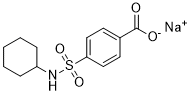
NSC23005 sodium is a novel and potent p18 inhibitor with ED50 of 5.21 nM in promoting Hematopoietic stem cells (HSCs) expansion in both murine and human models. Hematopoietic stem cells have emerged as promising therapeutic cell sources for high-risk hematological malignancies and immune disorders. However, their clinical use is limited by the inability to expand these cells ex vivo. Therefore, there is an urgent need to identify specific targets and effective probes that can expand HSCs. NSC23005 sodium represents novel chemical agents for murine and human HSCs ex vivo expansion and also can be used as valuable chemical probes for further HSC biology research towards promising utility for therapeutic purposes.
Physicochemical Properties
| Molecular Formula | C13H16NNAO4S | |
| Molecular Weight | 305.32 | |
| Exact Mass | 305.07 | |
| CAS # | 1796596-46-7 | |
| Related CAS # | 1796596-46-7 (sodium);6314-70-1 (free acid); | |
| PubChem CID | 122705986 | |
| Appearance | White to off-white solid powder | |
| Hydrogen Bond Donor Count | 1 | |
| Hydrogen Bond Acceptor Count | 5 | |
| Rotatable Bond Count | 4 | |
| Heavy Atom Count | 20 | |
| Complexity | 407 | |
| Defined Atom Stereocenter Count | 0 | |
| InChi Key | MLHFBDVMTRIQMW-UHFFFAOYSA-M | |
| InChi Code | InChI=1S/C13H17NO4S.Na/c15-13(16)10-6-8-12(9-7-10)19(17,18)14-11-4-2-1-3-5-11;/h6-9,11,14H,1-5H2,(H,15,16);/q;+1/p-1 | |
| Chemical Name |
|
|
| Synonyms |
|
|
| HS Tariff Code | 2934.99.9001 | |
| Storage |
Powder-20°C 3 years 4°C 2 years In solvent -80°C 6 months -20°C 1 month Note: Please store this product in a sealed and protected environment, avoid exposure to moisture. |
|
| Shipping Condition | Room temperature (This product is stable at ambient temperature for a few days during ordinary shipping and time spent in Customs) |
Biological Activity
| Targets |
NSC23005 sodium: Cyclin-dependent kinase inhibitor 2C (INK4C; CDKN2C) EC50=0.5 μM for promoting human CD34⁺ hematopoietic stem cell (HSC) expansion in vitro[1] |
| ln Vitro |
Compound 40, also known as NSC23005 sodium, is a new family of INK4C (p18INK4C or p18) small molecule inhibitors (p18SMIs), initially discovered by in silico 3D screening. The most powerful bioactivity in HSC expansion is demonstrated by NSC23005 sodium. Interestingly, NSC23005 sodium (ED50=5.21 nM) exhibits little activity in leukemia cell proliferation[1]. 1. NSC23005 sodium (0.1–1 μM) dose-dependently promoted the ex vivo expansion of human cord blood CD34⁺ HSCs; at 0.5 μM, it increased the total number of CD34⁺ cells by 8.2-fold after 7 days of culture, and the number of CD34⁺CD38⁻ primitive HSCs by 12.5-fold, compared to vehicle-treated controls [1] 2. In murine lineage-negative Sca-1⁺c-Kit⁺ (LSK) hematopoietic stem/progenitor cells, NSC23005 sodium (0.5 μM) enhanced cell expansion by 6.7-fold over 5 days and increased the frequency of LSK-SLAM (LSK CD150⁺CD48⁻) primitive HSCs by 9.3-fold [1] 3. qPCR analysis showed that NSC23005 sodium (0.5 μM) downregulated Ink4c mRNA expression in human CD34⁺ cells by 70% and in murine LSK cells by 65% after 48 hours of treatment; western blot confirmed a 60% reduction in INK4C protein levels in both cell types [1] 4. NSC23005 sodium (0.5 μM) increased the clonogenic potential of human CD34⁺ cells, with a 3.8-fold increase in colony-forming unit-granulocyte macrophage (CFU-GM) and a 2.9-fold increase in burst-forming unit-erythroid (BFU-E) colonies compared to controls [1] 5. Cell cycle analysis revealed that NSC23005 sodium (0.5 μM) increased the proportion of human CD34⁺ cells in the S phase from 12% (control) to 28% and reduced the G0/G1 population from 78% to 62%, indicating accelerated cell cycle progression [1] 6. NSC23005 sodium had no significant effect on the viability of human CD34⁺ cells or murine LSK cells at concentrations up to 1 μM (cell viability >90% by trypan blue exclusion assay), and did not induce apoptosis (Annexin V⁺PI⁻ cells <5%) [1] |
| ln Vivo |
NSC23005 sodium inhibits p18, which activates CDK4/6 and specifically promotes HSC division. In both murine and human models, NSC23005 sodium is a new and potent p18 inhibitor that promotes HSC expansion[1]. 1. In lethally irradiated C57BL/6 mice, transplantation of murine LSK cells expanded ex vivo with NSC23005 sodium (0.5 μM) for 5 days led to a 90% engraftment rate in the bone marrow at 12 weeks post-transplantation, compared to a 65% engraftment rate for control-expanded cells; the chimerism level (donor-derived cells) was 75% in the NSC23005 sodium group versus 45% in controls [1] 2. Secondary transplantation of bone marrow cells from primary recipients of NSC23005 sodium-expanded LSK cells resulted in a 85% engraftment rate, demonstrating the preservation of long-term repopulating capacity of HSCs [1] 3. NSC23005 sodium-expanded human CD34⁺ cells, when transplanted into NOD/SCID mice, showed a 2.5-fold higher level of human CD45⁺ cell engraftment in the bone marrow at 8 weeks post-transplantation compared to control-expanded cells [1] |
| Enzyme Assay |
1. To assess the direct binding of NSC23005 sodium to INK4C protein, a fluorescence polarization (FP) assay was performed using recombinant human INK4C protein labeled with a fluorescent probe; NSC23005 sodium was incubated with the labeled protein at concentrations ranging from 0.01 to 10 μM, and fluorescence polarization values were measured at room temperature for 1 hour. The assay confirmed a dose-dependent binding interaction, with a Kd value of 0.32 μM for the NSC23005 sodium-INK4C complex [1] 2. For the INK4C-CDK4 binding inhibition assay, recombinant CDK4 protein was incubated with fluorescently labeled INK4C and serial dilutions of NSC23005 sodium; the formation of the INK4C-CDK4 complex was monitored by time-resolved fluorescence resonance energy transfer (TR-FRET). NSC23005 sodium inhibited the interaction with an IC50 of 0.45 μM, confirming its ability to disrupt the INK4C-CDK4 complex [1] |
| Cell Assay |
1. Human CD34⁺ HSC expansion assay [1] : Human cord blood CD34⁺ cells were isolated and seeded in 24-well plates at a density of 1×10⁵ cells/mL in serum-free stem cell medium supplemented with cytokines (SCF, TPO, Flt3-L). NSC23005 sodium was added at concentrations of 0.1, 0.5, or 1 μM, and the cells were cultured at 37°C with 5% CO₂ for 7 days. Cell counts were performed daily using a hemocytometer, and CD34⁺ cell purity was determined by flow cytometry with anti-CD34 and anti-CD38 antibodies. 2. Murine LSK cell expansion assay [1] : Bone marrow cells from C57BL/6 mice were isolated, and LSK cells were enriched by magnetic cell sorting. The cells were seeded at 5×10⁴ cells/mL in cytokine-supplemented medium (SCF, IL-3, IL-6) and treated with NSC23005 sodium (0.5 μM) or vehicle for 5 days. LSK and LSK-SLAM cell frequencies were analyzed by flow cytometry using antibodies against Sca-1, c-Kit, CD150, and CD48. 3. Gene and protein expression analysis [1] : Human CD34⁺ cells and murine LSK cells were treated with NSC23005 sodium (0.5 μM) for 48 hours, and total RNA was extracted for qPCR analysis of Ink4c, p16, p21, and c-Myc gene expression (GAPDH as a housekeeping gene). For western blot, cell lysates were prepared, and equal amounts of protein were separated by SDS-PAGE, transferred to membranes, and probed with antibodies against INK4C, CDK4, cyclin D1, and β-actin (loading control). Band intensities were quantified using imaging software. 4. Colony-forming unit (CFU) assay [1] : Human CD34⁺ cells treated with NSC23005 sodium (0.5 μM) for 48 hours were seeded in methylcellulose medium containing hematopoietic growth factors at a density of 500 cells per well. Colonies (CFU-GM, BFU-E, CFU-GEMM) were counted after 14 days of incubation at 37°C with 5% CO₂. 5. Cell cycle and apoptosis analysis [1] : Treated human CD34⁺ cells were stained with propidium iodide (PI) for cell cycle analysis by flow cytometry, with cell cycle phases quantified using dedicated software. Apoptosis was assessed by staining cells with Annexin V-FITC and PI, and the percentage of apoptotic cells was determined by flow cytometry. |
| Animal Protocol |
Mice (6–8 weeks old) 1. Murine HSC transplantation assay [1] : C57BL/6 mice were lethally irradiated with a total dose of 9.5 Gy (split into two doses 4 hours apart). Murine LSK cells expanded with NSC23005 sodium (0.5 μM) or vehicle for 5 days were injected intravenously into the tail vein at a dose of 1×10⁴ cells per mouse. Bone marrow was harvested at 4, 8, and 12 weeks post-transplantation, and donor-derived cell chimerism was analyzed by flow cytometry using congenic markers (CD45.1/CD45.2). For secondary transplantation, bone marrow cells from primary recipients were isolated and injected into lethally irradiated secondary recipients (5×10⁶ cells per mouse), and engraftment was assessed at 12 weeks. 2. Human HSC xenotransplantation assay [1] : NOD/SCID mice were sub-lethally irradiated with 2.5 Gy and injected intravenously with human CD34⁺ cells expanded with NSC23005 sodium (0.5 μM) or vehicle for 7 days (2×10⁵ cells per mouse). Bone marrow, spleen, and peripheral blood were collected at 8 weeks post-transplantation, and human CD45⁺ cell engraftment was quantified by flow cytometry. 3. Drug formulation for in vivo studies [1] : NSC23005 sodium was dissolved in sterile PBS to a stock concentration of 10 mM, and diluted in mouse serum-free medium to the final working concentration (0.5 μM) for ex vivo cell expansion. For any in vivo administration (not performed in this study), the drug was formulated as a sterile aqueous solution with 5% mannitol to improve solubility. |
| Toxicity/Toxicokinetics |
1. NSC23005 sodium showed no cytotoxicity to human CD34⁺ HSCs or murine LSK cells at concentrations up to 2 μM, with cell viability >90% as measured by trypan blue exclusion and MTT assay [1] 2. In NOD/SCID mice transplanted with NSC23005 sodium-expanded human CD34⁺ cells, no significant changes in body weight, peripheral blood cell counts (WBC, RBC, platelets), or histopathological abnormalities in the liver, kidney, or bone marrow were observed at 8 weeks post-transplantation [1] 3. NSC23005 sodium did not induce genotoxicity in human CD34⁺ cells, as assessed by the comet assay (tail moment <1.2, compared to >5 for positive control (H₂O₂)) [1] |
| References |
[1]. Discovery of novel INK4C small-molecule inhibitors to promote human and murine hematopoietic stem cell ex vivo expansion. Sci Rep. 2015 Dec 18;5:18115. |
| Additional Infomation |
1. NSC23005 sodium is a small-molecule inhibitor of INK4C (CDKN2C), a cyclin-dependent kinase inhibitor that negatively regulates the G1/S phase transition of the cell cycle in hematopoietic stem cells (HSCs) [1] 2. INK4C is highly expressed in quiescent HSCs and limits their proliferation; NSC23005 sodium disrupts the INK4C-CDK4 complex to release CDK4 activity, promoting HSC entry into the cell cycle and ex vivo expansion without compromising their self-renewal and differentiation potential [1] 3. NSC23005 sodium was identified through a high-throughput screen of a small-molecule library (NCI Diversity Set) for compounds that upregulate HSC proliferation and downregulate Ink4c expression [1] 4. The ex vivo expansion of HSCs using NSC23005 sodium has potential clinical applications in hematopoietic stem cell transplantation for the treatment of hematological malignancies, bone marrow failure syndromes, and genetic blood disorders [1] 5. NSC23005 sodium is selective for INK4C, with no significant inhibition of other CDK inhibitors (p16INK4a, p21Cip1, p27Kip1) at therapeutic concentrations (0.5 μM) [1] |
Solubility Data
| Solubility (In Vitro) |
|
|||
| Solubility (In Vivo) |
Note: Listed below are some common formulations that may be used to formulate products with low water solubility (e.g. < 1 mg/mL), you may test these formulations using a minute amount of products to avoid loss of samples. Injection Formulations (e.g. IP/IV/IM/SC) Injection Formulation 1: DMSO : Tween 80: Saline = 10 : 5 : 85 (i.e. 100 μL DMSO stock solution → 50 μL Tween 80 → 850 μL Saline) *Preparation of saline: Dissolve 0.9 g of sodium chloride in 100 mL ddH ₂ O to obtain a clear solution. Injection Formulation 2: DMSO : PEG300 :Tween 80 : Saline = 10 : 40 : 5 : 45 (i.e. 100 μL DMSO → 400 μLPEG300 → 50 μL Tween 80 → 450 μL Saline) Injection Formulation 3: DMSO : Corn oil = 10 : 90 (i.e. 100 μL DMSO → 900 μL Corn oil) Example: Take the Injection Formulation 3 (DMSO : Corn oil = 10 : 90) as an example, if 1 mL of 2.5 mg/mL working solution is to be prepared, you can take 100 μL 25 mg/mL DMSO stock solution and add to 900 μL corn oil, mix well to obtain a clear or suspension solution (2.5 mg/mL, ready for use in animals). Injection Formulation 4: DMSO : 20% SBE-β-CD in saline = 10 : 90 [i.e. 100 μL DMSO → 900 μL (20% SBE-β-CD in saline)] *Preparation of 20% SBE-β-CD in Saline (4°C,1 week): Dissolve 2 g SBE-β-CD in 10 mL saline to obtain a clear solution. Injection Formulation 5: 2-Hydroxypropyl-β-cyclodextrin : Saline = 50 : 50 (i.e. 500 μL 2-Hydroxypropyl-β-cyclodextrin → 500 μL Saline) Injection Formulation 6: DMSO : PEG300 : castor oil : Saline = 5 : 10 : 20 : 65 (i.e. 50 μL DMSO → 100 μLPEG300 → 200 μL castor oil → 650 μL Saline) Injection Formulation 7: Ethanol : Cremophor : Saline = 10: 10 : 80 (i.e. 100 μL Ethanol → 100 μL Cremophor → 800 μL Saline) Injection Formulation 8: Dissolve in Cremophor/Ethanol (50 : 50), then diluted by Saline Injection Formulation 9: EtOH : Corn oil = 10 : 90 (i.e. 100 μL EtOH → 900 μL Corn oil) Injection Formulation 10: EtOH : PEG300:Tween 80 : Saline = 10 : 40 : 5 : 45 (i.e. 100 μL EtOH → 400 μLPEG300 → 50 μL Tween 80 → 450 μL Saline) Oral Formulations Oral Formulation 1: Suspend in 0.5% CMC Na (carboxymethylcellulose sodium) Oral Formulation 2: Suspend in 0.5% Carboxymethyl cellulose Example: Take the Oral Formulation 1 (Suspend in 0.5% CMC Na) as an example, if 100 mL of 2.5 mg/mL working solution is to be prepared, you can first prepare 0.5% CMC Na solution by measuring 0.5 g CMC Na and dissolve it in 100 mL ddH2O to obtain a clear solution; then add 250 mg of the product to 100 mL 0.5% CMC Na solution, to make the suspension solution (2.5 mg/mL, ready for use in animals). Oral Formulation 3: Dissolved in PEG400 Oral Formulation 4: Suspend in 0.2% Carboxymethyl cellulose Oral Formulation 5: Dissolve in 0.25% Tween 80 and 0.5% Carboxymethyl cellulose Oral Formulation 6: Mixing with food powders Note: Please be aware that the above formulations are for reference only. InvivoChem strongly recommends customers to read literature methods/protocols carefully before determining which formulation you should use for in vivo studies, as different compounds have different solubility properties and have to be formulated differently. (Please use freshly prepared in vivo formulations for optimal results.) |
| Preparing Stock Solutions | 1 mg | 5 mg | 10 mg | |
| 1 mM | 3.2753 mL | 16.3763 mL | 32.7525 mL | |
| 5 mM | 0.6551 mL | 3.2753 mL | 6.5505 mL | |
| 10 mM | 0.3275 mL | 1.6376 mL | 3.2753 mL |