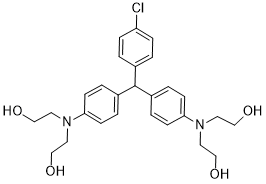
LM22B-10 (LM22B10) is a novel, potent activator of TrkB/TrkC (Tropomyosin-receptor kinase) neurotrophin receptor, inducing TrkB, TrkC, AKT and ERK activation in vitro and in vivo. At 250 nM–2000 nM concentrations, it binds to TrkB and TrkC in a dose-dependent manner. Neurite outgrowth is accelerated and cell survival is increased.
Physicochemical Properties
| Molecular Formula | C27H33CLN2O4 |
| Molecular Weight | 485.014926671982 |
| Exact Mass | 484.21 |
| Elemental Analysis | C, 66.86; H, 6.86; Cl, 7.31; N, 5.78; O, 13.19 |
| CAS # | 342777-54-2 |
| Related CAS # | 342777-54-2 |
| PubChem CID | 542158 |
| Appearance | Light green to green solid powder |
| LogP | 3.4 |
| Hydrogen Bond Donor Count | 4 |
| Hydrogen Bond Acceptor Count | 6 |
| Rotatable Bond Count | 13 |
| Heavy Atom Count | 34 |
| Complexity | 485 |
| Defined Atom Stereocenter Count | 0 |
| InChi Key | QCXQLSGBOUUVNH-UHFFFAOYSA-N |
| InChi Code | InChI=1S/C27H33ClN2O4/c28-24-7-1-21(2-8-24)27(22-3-9-25(10-4-22)29(13-17-31)14-18-32)23-5-11-26(12-6-23)30(15-19-33)16-20-34/h1-12,27,31-34H,13-20H2 |
| Chemical Name | 2-[4-[[4-[bis(2-hydroxyethyl)amino]phenyl]-(4-chlorophenyl)methyl]-N-(2-hydroxyethyl)anilino]ethanol |
| Synonyms | LM22B-10; LM22B10; LM-22B10; LM-22B-10; LM22B 10 |
| HS Tariff Code | 2934.99.9001 |
| Storage |
Powder-20°C 3 years 4°C 2 years In solvent -80°C 6 months -20°C 1 month |
| Shipping Condition | Room temperature (This product is stable at ambient temperature for a few days during ordinary shipping and time spent in Customs) |
Biological Activity
| Targets |
TrkB; TrkC; Akt; ERK Tropomyosin receptor kinase B (TrkB) (EC50 = 1.8 μM for receptor activation) [1] Tropomyosin receptor kinase C (TrkC) (EC50 = 2.5 μM for receptor activation) [1] |
| ln Vitro |
LM22B-10 possesses maximal neurotrophic survival activity levels with an EC50 value of 200-300 nM, which are higher than those maximally achieved with BDNF (53 ± 7.2% above BDNF at 0.7 nM) and NT-3 (91 ± 8.6% above NT-3 at 0.7 nM). Neurites with significantly larger average lengths, up to -40 μM, are induced by LM22B-10 (1000 nM). The binding of LM22B-10 (250-2000 nM) to TrkB-Fc and TrkC-Fc is dose-dependent. LM22B-10 prevents BDNF from attaching to cells that express TrkB, and NT-3 from attaching to cells that express TrkC. LM22B-10 acts preferentially through TrkB and TrkC and enhances cell survival. In an inhibitory environment, neurite outgrowth is promoted by LM22B-10 but not by BDNF or NT-3. Different from BDNF and NT-3, LM22B-10 induces different patterns of Trk and downstream signaling activation. Moreover, LM22B-10 activates TrkB, TrkC, AKT, and ERK in cultured hippocampal neurons[1]. - LM22B-10 is a selective co-activator of TrkB and TrkC neurotrophin receptors. It dose-dependently activated TrkB and TrkC in HEK293T cells transfected with human TrkB or TrkC, increasing phosphorylation of TrkB (Y816) and TrkC (Y820) (Western blot) [1] - In primary rat cortical neurons, LM22B-10 (0.1-10 μM) promoted neuronal survival under serum deprivation: at 10 μM, it increased survival rate by ~60% compared with the control group (MTT assay). It also enhanced neurite outgrowth: increased total neurite length (by ~80%) and branch number (by ~50%) at 5 μM (image analysis software) [1] - In primary rat hippocampal neurons, LM22B-10 (1-10 μM) activated downstream signaling pathways of TrkB/TrkC: upregulated phosphorylated Akt (Ser473) and ERK1/2 (Thr202/Tyr204) (Western blot), without affecting TrkA phosphorylation [1] - LM22B-10 (0.5-10 μM) did not induce cytotoxicity in primary cortical or hippocampal neurons, with cell viability maintained above 90% even at 10 μM (MTT assay) [1] |
| ln Vivo | LM22B-10 (0.5 mg/kg) activates TrkB, TrkC, AKT, and ERK in C57BL/6J mice. TrkB Y817 and TrkC Y820 exhibit elevated phosphorylation when exposed to LM22B-10 (50 mg/kg, i.p.). In aged mice, LM22B-10 increases pre- and post-synaptic proteins, spine density, and activates synaptic TrkB and TrkC[1]. |
| Enzyme Assay |
- Trk receptor binding assay (TR-FRET): Recombinant TrkB/TrkC extracellular domains were incubated with LM22B-10 (0.01-100 μM) and a fluorescently labeled neurotrophin ligand. Time-resolved fluorescence resonance energy transfer (TR-FRET) signals were measured to assess binding affinity, and EC50 values were calculated from concentration-response curves [1] - Trk kinase activity assay: Purified TrkB/TrkC kinase domains were incubated with LM22B-10 (0.1-20 μM), ATP, and a specific peptide substrate. Phosphorylated substrate was detected by ELISA, and kinase activation efficiency was quantified relative to vehicle control [1] |
| Cell Assay |
Mouse NIH-3T3 cells Propagation of NIH-3T3 cells expressing TrkA (NIH-3T3-TrkA) or p75NTR (NIH-3T3-p75NTR) and TrkB (NIH-3T3-TrkB) or TrkC (NIH-3T3-TrkC) takes place in DMEM supplemented with 10% FBS and 200–400 μg/mL Geneticin (for Trk-expressing cells) or 400 μg/mL hygromycin (for p75NTR-expressing cells...). Seeded cells are cultivated in a medium comprising 50% DMEM and 50% PBS without any additional supplements in 24-well plates, with 30,000 cells/well. The ViaLight Assay is used to measure the survival of cells suspended in 50 μL lysis buffer that have been transferred to opaque 96-well culture plates after they have been exposed to growth factors (0.7 nM) or 1000 nM LM22B-10 for 72-96 hours. - Neuronal survival assay: Primary rat cortical neurons were seeded in 96-well plates and cultured in serum-free medium. LM22B-10 (0.1-10 μM) was added, and cells were incubated for 72 hours. MTT reagent was added to measure absorbance at 570 nm, and survival rate was calculated relative to serum-supplemented controls [1] - Neurite outgrowth assay: Primary rat cortical/hippocampal neurons were seeded on poly-L-lysine-coated coverslips and treated with LM22B-10 (0.5-10 μM) for 48 hours. Cells were fixed and stained with β-tubulin III antibody, and neurite length/branch number were analyzed by image analysis software [1] - Signaling pathway activation assay: Primary hippocampal neurons were treated with LM22B-10 (1-10 μM) for 30 minutes. Cells were lysed, and proteins were extracted for Western blot analysis using antibodies against phosphorylated TrkB (Y816), TrkC (Y820), Akt (Ser473), ERK1/2 (Thr202/Tyr204), and total TrkB/TrkC/Akt/ERK1/2 (β-actin as internal control) [1] |
| References |
[1]. A small molecule TrkB/TrkC neurotrophin receptor co-activator with distinctive effects on neuronal survival and process outgrowth. Neuropharmacology. 2016 Nov;110(Pt A):343-61. |
| Additional Infomation |
- LM22B-10 is a synthetic small-molecule co-activator of TrkB and TrkC neurotrophin receptors [1] - Its mechanism of action involves binding to the extracellular domain of TrkB/TrkC, promoting receptor dimerization and autophosphorylation, thereby activating downstream PI3K-Akt and Ras-ERK1/2 signaling pathways [1] - LM22B-10 exhibits distinctive effects on neuronal function: it potently promotes neuronal survival and neurite outgrowth without activating TrkA, showing receptor selectivity [1] - The compound has potential research value for neuroprotective strategies in neurodegenerative diseases (e.g., Alzheimer's disease, Parkinson's disease) by targeting TrkB/TrkC-mediated neuronal survival and plasticity [1] |
Solubility Data
| Solubility (In Vitro) |
DMSO: 97 mg/mL (~200.0 mM) Ethanol: 97 mg/mL (~200.0 mM) |
| Solubility (In Vivo) |
Solubility in Formulation 1: ≥ 2.5 mg/mL (5.15 mM) (saturation unknown) in 10% DMSO + 40% PEG300 + 5% Tween80 + 45% Saline (add these co-solvents sequentially from left to right, and one by one), clear solution. For example, if 1 mL of working solution is to be prepared, you can add 100 μL of 25.0 mg/mL clear DMSO stock solution to 400 μL PEG300 and mix evenly; then add 50 μL Tween-80 to the above solution and mix evenly; then add 450 μL normal saline to adjust the volume to 1 mL. Preparation of saline: Dissolve 0.9 g of sodium chloride in 100 mL ddH₂ O to obtain a clear solution. Solubility in Formulation 2: ≥ 2.5 mg/mL (5.15 mM) (saturation unknown) in 10% DMSO + 90% Corn Oil (add these co-solvents sequentially from left to right, and one by one), clear solution. For example, if 1 mL of working solution is to be prepared, you can add 100 μL of 25.0 mg/mL clear DMSO stock solution to 900 μL of corn oil and mix evenly. Solubility in Formulation 3: ≥ 2.08 mg/mL (4.29 mM) (saturation unknown) in 10% DMSO + 90% (20% SBE-β-CD in Saline) (add these co-solvents sequentially from left to right, and one by one), clear solution. For example, if 1 mL of working solution is to be prepared, you can add 100 μL of 20.8 mg/mL clear DMSO stock solution to 900 μL of 20% SBE-β-CD physiological saline solution and mix evenly. Preparation of 20% SBE-β-CD in Saline (4°C,1 week): Dissolve 2 g SBE-β-CD in 10 mL saline to obtain a clear solution. (Please use freshly prepared in vivo formulations for optimal results.) |
| Preparing Stock Solutions | 1 mg | 5 mg | 10 mg | |
| 1 mM | 2.0618 mL | 10.3091 mL | 20.6181 mL | |
| 5 mM | 0.4124 mL | 2.0618 mL | 4.1236 mL | |
| 10 mM | 0.2062 mL | 1.0309 mL | 2.0618 mL |