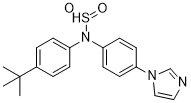
ISCK03 is a potent c-kit inhibitor. In mice and brownish guinea pigs, ISCK03 completely eliminates melanin synthesis and suppresses SCF/c-kit signaling in 501mel human melanoma cells. The phosphorylation of p44/42 ERK mitogen-activated protein kinase (MAPK), which is known to be involved in downstream signaling of SCF/c-kit, was also inhibited by ISCK03. It is possible to use ISCK03 as a skin-whitening agent.
Physicochemical Properties
| Molecular Formula | C19H21N3O2S |
| Molecular Weight | 355.4539 |
| Exact Mass | 355.135 |
| Elemental Analysis | C, 64.20; H, 5.96; N, 11.82; O, 9.00; S, 9.02 |
| CAS # | 945526-43-2 |
| Related CAS # | 945526-43-2 |
| PubChem CID | 3792751 |
| Appearance | Off-white to light yellow solid powder |
| Density | 1.2±0.1 g/cm3 |
| Boiling Point | 520.0±60.0 °C at 760 mmHg |
| Flash Point | 268.3±32.9 °C |
| Vapour Pressure | 0.0±1.4 mmHg at 25°C |
| Index of Refraction | 1.607 |
| LogP | 4.03 |
| Hydrogen Bond Donor Count | 1 |
| Hydrogen Bond Acceptor Count | 4 |
| Rotatable Bond Count | 5 |
| Heavy Atom Count | 25 |
| Complexity | 522 |
| Defined Atom Stereocenter Count | 0 |
| SMILES | O=S(C1C=CC(C(C)(C)C)=CC=1)(NC1C=CC(N2C=CN=C2)=CC=1)=O |
| InChi Key | XQABBHBFHWHMKF-UHFFFAOYSA-N |
| InChi Code | InChI=1S/C19H21N3O2S/c1-19(2,3)15-4-10-18(11-5-15)25(23,24)21-16-6-8-17(9-7-16)22-13-12-20-14-22/h4-14,21H,1-3H3 |
| Chemical Name | 4-tert-butyl-N-(4-imidazol-1-ylphenyl)benzenesulfonamide |
| Synonyms | ISCK03; ISCK 03; ISCK-03 |
| HS Tariff Code | 2934.99.9001 |
| Storage |
Powder-20°C 3 years 4°C 2 years In solvent -80°C 6 months -20°C 1 month |
| Shipping Condition | Room temperature (This product is stable at ambient temperature for a few days during ordinary shipping and time spent in Customs) |
Biological Activity
| Targets | SCF; c-Kit |
| ln Vitro | Pretreatment of 501mel cells with ISCK03 inhibits SCF-induced c-kit phosphorylation dose dependently. Additionally, ISCK03 prevents the phosphorylation of p44/42 ERK mitogen-activated protein kinase (MAPK), which is known to be connected to downstream signaling of SCF/c-kit. Nevertheless, ISCK03 is not able to prevent the phosphorylation of p44/42 ERK proteins caused by hepatocyte growth factor (HGF)[1]. CCDC26-KD cells cannot survive in low-serum environments when ISCK03, a tyrosine kinase inhibitor specific to KIT, is present. A dose-dependent sensitivity to ISCK03 is seen in all treated cells. Following ISCK03 treatment, KD cells experience the same level of survival suppression as non-KD cells. On the other hand, under circumstances of high serum concentration, ISCK03 treatment has minimal effects on the growth of control K562 and KD clone 3-5 cells[2]. |
| ln Vivo | Oral ISCK03 treatment causes newly regrown hair to depigment in a dose-dependent manner, which is reversed when the treatment is stopped. UV-induced hyperpigmented spots can be made to become less pigmented by applying ISCK03 topically. Epidermal melanin in areas treated with ISCK03 is reduced, according to Fontana-Masson staining analysis[1]. |
| Enzyme Assay | Recombinant human c-kit protein is added for the kinase reaction, ATP is dispensed into 384-well plates, and chemical compounds (ISCK03: 2.5, 5, 10, 100 μM) are added by replicative plate. The development reaction is then allowed to run at room temperature for 40 minutes after a 45-minute incubation period at 37°C. The coumrain and fluorescein fluorescence-emission signals are detected after the reaction is stopped[1]. |
| Cell Assay | In order to ascertain whether ISCK03 has any cytotoxic effects on 501mel cells, MTT assays are conducted utilizing varying doses of ISCK03 (1, 5, 10 μM). 501mel cells are cultured for 48 hours either with SCF with ISCK03 or with SCF alone (50 ng/mL)[1]. |
| Animal Protocol | Mice: The female C57BL/6 mice's backs are depilated in order to initiate the hair cycle. Mice under anesthesia have their hair briefly removed. Intraperitoneal injection of 50 mg of the rat antimouse c-kit-neutralizing monoclonal antibody ACK2 is done daily. One oral dose of ISCK03 is given each day. Animals are sacrificed or examined for repigmentation of the newly regrown hair shaft on days 21–28. For immunohistochemical analyses, skin is removed, frozen, and fixed in paraffin[1]. |
| References |
[1]. Repeated cisplatin treatment can lead to a multiresistant tumor cell population with stem cell features and sensitivity to 3-bromopyruvate. Cancer Biol Ther. 2012 Dec;13(14):1454-62. [2]. [4-t-butylphenyl]-N-(4-imidazol-1-yl phenyl)sulfonamide (ISCK03) inhibits SCF/c-kit signaling in 501mel human melanoma cells and abolishes melanin production in mice and brownish guinea pigs. Biochem Pharmacol. 2007 Sep 1;74(5):780-6. [3]. Long noncoding RNA, CCDC26, controls myeloid leukemia cell growth through regulation of KIT expression. Mol Cancer. 2015 Apr 19;14:90. doi: 10.1186/s12943-015-0364-7. |
Solubility Data
| Solubility (In Vitro) |
DMSO: ~71 mg/mL (~199.8 mM) Ethanol: ~3 mg/mL (~8.4 mM) |
| Solubility (In Vivo) |
Solubility in Formulation 1: ≥ 2.5 mg/mL (7.03 mM) (saturation unknown) in 10% DMSO + 90% (20% SBE-β-CD in Saline) (add these co-solvents sequentially from left to right, and one by one), clear solution. For example, if 1 mL of working solution is to be prepared, you can add 100 μL of 25.0 mg/mL clear DMSO stock solution to 900 μL of 20% SBE-β-CD physiological saline solution and mix evenly. Preparation of 20% SBE-β-CD in Saline (4°C,1 week): Dissolve 2 g SBE-β-CD in 10 mL saline to obtain a clear solution. Solubility in Formulation 2: ≥ 2.5 mg/mL (7.03 mM) (saturation unknown) in 10% DMSO + 90% Corn Oil (add these co-solvents sequentially from left to right, and one by one), clear solution. For example, if 1 mL of working solution is to be prepared, you can add 100 μL of 25.0 mg/mL clear DMSO stock solution to 900 μL of corn oil and mix evenly. (Please use freshly prepared in vivo formulations for optimal results.) |
| Preparing Stock Solutions | 1 mg | 5 mg | 10 mg | |
| 1 mM | 2.8133 mL | 14.0667 mL | 28.1334 mL | |
| 5 mM | 0.5627 mL | 2.8133 mL | 5.6267 mL | |
| 10 mM | 0.2813 mL | 1.4067 mL | 2.8133 mL |