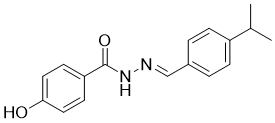
GSK4716 is a novel, potent and selective agonist for the beta and gamma estrogen-related receptors (ERRβ and ERRγ). GSK4716, an ERRbeta/gamma agonist, significantly increased the expression of GRalpha (isoform D) protein in differentiated skeletal muscle cells. Following GSK4716 treatment, quantitative RT-PCR (Q-RT-PCR) analysis demonstrated induction of the mRNAs encoding the glucocorticoid receptor (GR), 11beta-hydroxysteroid dehydrogenase type 1 (11beta-HSD1), the enzyme that changes dormant cortisone into cortisol, and hexose-6-phosphate dehydrogenase expression (H6PDH), which promotes oxoreduction by 11beta-HSD1. Additionally, candidate-based expression profiling showed that GSK4716-treated cells induce the mRNAs encoding GR target genes that have been characterized, such as C/EBP, ApoD, and monoamine oxidase-A (MAO-A). These observations are supported by the fact that mRNAs encoding GR, 11betaHSD1, and GR target gene(s) were less expressed when the mRNA encoding ERRgamma (but not ERRalpha and beta) was suppressed via siRNA. Similar to this, skeletal muscle cells treated with diethylstilbestrol (DES), an antagonist of both ERgamma and ERalpha, showed reduced expression of the gene responsible for glucocorticoid responses. That's right, we saw that GSK4716 required GR in order to trans-activate GRE-TK-LUC. The regulatory overlap between ERRgamma and GR signaling in skeletal muscle cells is highlighted by this study, which also implies that the ERRgamma agonist affects the expression of important genes that regulate GR signaling and the expression of glucocorticoid-sensitive genes.
Physicochemical Properties
| Molecular Formula | C17H18N2O2 |
| Molecular Weight | 282.3370 |
| Exact Mass | 282.137 |
| Elemental Analysis | C, 72.32; H, 6.43; N, 9.92; O, 11.33 |
| CAS # | 101574-65-6 |
| Related CAS # | 101574-65-6 |
| PubChem CID | 5331325 |
| Appearance | White to off-white solid powder |
| Density | 1.12g/cm3 |
| Index of Refraction | 1.576 |
| LogP | 3.67 |
| Hydrogen Bond Donor Count | 2 |
| Hydrogen Bond Acceptor Count | 3 |
| Rotatable Bond Count | 4 |
| Heavy Atom Count | 21 |
| Complexity | 352 |
| Defined Atom Stereocenter Count | 0 |
| SMILES | O([H])C1C([H])=C([H])C(C(N([H])N=C([H])C2C([H])=C([H])C(=C([H])C=2[H])C([H])(C([H])([H])[H])C([H])([H])[H])=O)=C([H])C=1[H] |
| InChi Key | IKPPIUNQWSRCOZ-WOJGMQOQSA-N |
| InChi Code | InChI=1S/C17H18N2O2/c1-12(2)14-5-3-13(4-6-14)11-18-19-17(21)15-7-9-16(20)10-8-15/h3-12,20H,1-2H3,(H,19,21)/b18-11+ |
| Chemical Name | 4-hydroxy-N-[(E)-(4-propan-2-ylphenyl)methylideneamino]benzamide |
| Synonyms | GSK 4716; GSK-4716; GSK4716 |
| HS Tariff Code | 2934.99.9001 |
| Storage |
Powder-20°C 3 years 4°C 2 years In solvent -80°C 6 months -20°C 1 month |
| Shipping Condition | Room temperature (This product is stable at ambient temperature for a few days during ordinary shipping and time spent in Customs) |
Biological Activity
| Targets |
ERRβ/γ
The target of GSK-4716 is estrogen-related receptor β (ERRβ) and estrogen-related receptor γ (ERRγ), which are orphan nuclear receptors involved in energy metabolism and muscle function. For human ERRγ, the half-maximal effective concentration (EC₅₀) in luciferase reporter assay is 0.1 μM [2] ; for human ERRβ, the EC₅₀ is 0.3 μM [1] . It shows no significant activation of ERRα (EC₅₀ > 10 μM) or estrogen receptor α/β (ERα/β, EC₅₀ > 10 μM), demonstrating high subtype selectivity [1,2] |
| ln Vitro |
Immunoreactivity of the GRα-D isoform is robustly and reproducibly increased when differentiated C2C12 cells are treated with the ERRβ/γ agonist for two to four hours (compared to vehicle). Research shows that treatment with GSK4716, an ERRβ/γ agonist, significantly increases the expression of MAO-A mRNA. Additionally, GSK4716 is observed to induce the expression of mRNAs encoding PGC-1β, a key regulator of many metabolic genes, and Peroxisome Proliferator-Activated Receptor-γcoactivator 1α (PGC-1α), which have been identified as direct coactivators for the ERR family. In line with the documented function of ERRγ in cardiac metabolism, GSK4716 promotes the expression of PGC-1 and fatty acid oxidation-related genes[1]. GSK4716, an ERRβ/γ agonist, causes a coordinated upregulation of Ppargc1a, Ppargc1b, and the Esrr genes in primary mouse myotubes. Moreover, GSK4716 also induces the genes Cpt1b, Atp5b, and Idh3, which are involved in important mitochondrial pathways. GSK4716 also raises the levels of cytochrome c protein and citrate synthase activity[2]. 1. ERRβ/γ activation: In COS-7 cells transfected with ERRβ or ERRγ luciferase reporter plasmids, GSK-4716 concentration-dependently activates ERRγ with an EC₅₀ of 0.1 μM (maximal activation 2.8-fold vs. vehicle) and ERRβ with an EC₅₀ of 0.3 μM (maximal activation 2.2-fold vs. vehicle). No activation of ERRα or ERα/β is observed at concentrations up to 10 μM [1,2] 2. Regulation of GRα expression in skeletal muscle cells: C2C12 myotubes treated with GSK-4716 (0.1–1 μM) for 24 hours showed a dose-dependent reduction in glucocorticoid receptor α (GRα) mRNA expression: 0.1 μM (30% reduction), 0.5 μM (45% reduction), 1 μM (60% reduction) vs. vehicle (real-time PCR). Western blot analysis confirmed a 55% reduction in GRα protein level at 1 μM [1] 3. Modulation of glucocorticoid-responsive genes: In C2C12 myotubes pretreated with GSK-4716 (1 μM) for 24 hours, followed by dexamethasone (100 nM) stimulation for 6 hours, the expression of glucocorticoid-responsive genes (PEPCK, G6Pase, IGFBP-1) was reduced by 40–50% compared to dexamethasone alone (real-time PCR) [1] 4. Enhancement of muscle mitochondrial activity and oxidative capacity: C2C12 myotubes treated with GSK-4716 (0.5–1 μM) for 48 hours showed increased mitochondrial DNA (mtDNA) content (1.8-fold at 1 μM vs. vehicle), enhanced oxygen consumption rate (OCR, 2.1-fold at 1 μM), and upregulated expression of mitochondrial biogenesis and oxidative metabolism genes (PGC-1α, NRF-1, CYCS, COX4I1) by 1.5–3.0-fold (real-time PCR and Western blot) [2] 5. No cytotoxicity: Treatment of C2C12 myotubes with GSK-4716 at concentrations up to 10 μM for 72 hours did not affect cell viability (MTT assay), with viability >95% compared to vehicle [1,2] |
| ln Vivo |
1. Improvement of skeletal muscle mitochondrial function in C57BL/6 mice: Male C57BL/6 mice (8-week-old) were administered GSK-4716 via intraperitoneal injection at 10 mg/kg/day for 14 days. Gastrocnemius muscle analysis showed a 2.3-fold increase in mtDNA content, a 1.7-fold increase in OCR, and upregulated expression of PGC-1α, CYCS, and COX4I1 (1.8–2.5-fold vs. vehicle, real-time PCR). Mitochondrial enzyme activities (citrate synthase, cytochrome c oxidase) were also increased by 40–60% [2] 2. Regulation of glucocorticoid signaling in mouse skeletal muscle: C57BL/6 mice treated with GSK-4716 (10 mg/kg/day, i.p. for 7 days) showed a 50% reduction in GRα mRNA and protein levels in quadriceps muscle compared to vehicle. When challenged with dexamethasone (5 mg/kg, i.p.), the induction of PEPCK and G6Pase mRNA in muscle was inhibited by 45% and 52%, respectively, in GSK-4716-pretreated mice [1] 3. No effect on body weight or organ morphology: Mice treated with GSK-4716 (10 mg/kg/day for 14 days) showed no significant changes in body weight, food intake, or histopathological features of major organs (liver, kidney, heart) [1,2] |
| Enzyme Assay |
1. ERRγ activation reporter assay: - COS-7 cells were seeded into 24-well plates at a density of 4×10⁴ cells/well and cultured overnight at 37°C with 5% CO₂ [2] - Cells were co-transfected with human ERRγ expression plasmid, ERR-responsive element (ERE)-luciferase reporter plasmid, and Renilla luciferase plasmid (internal control) using transfection reagent [2] - Twenty-four hours post-transfection, serial dilutions of GSK-4716 (0.001–10 μM) or vehicle (dimethyl sulfoxide, DMSO) were added to the wells, and cells were incubated for another 18 hours [2] - Cell lysates were prepared, and luciferase activity was measured using a dual-luciferase reporter assay system. The relative luciferase activity (firefly luciferase/Renilla luciferase) was calculated, and EC₅₀ values were derived from dose-response curves [2] 2. ERRβ activation reporter assay: - The experimental procedure was identical to the ERRγ assay, except that human ERRβ expression plasmid was used instead of ERRγ. GSK-4716 was tested at concentrations of 0.01–10 μM, and ERα/β and ERRα reporter plasmids were used as negative controls to verify selectivity [1] |
| Cell Assay |
Mouse C2C12 myoblasts that are actively growing are cultivated and kept in DMEM that has been enhanced with 10% heat-inactivated serum supreme. Myoblasts are differentiated into post-mitotic, multi-nucleated myotubes by withholding mitogens (DMEM enriched with 2% horse serum) for a duration of four days. After one day of treatment with either vehicle (DMSO) or the ERRβ/γ agonist GSK4716, RNA is extracted and processed from C2C12 myotubes[1]. 1. C2C12 myoblast differentiation and GRα expression assay: - C2C12 myoblasts were seeded into 6-well plates at a density of 1×10⁵ cells/well and cultured in DMEM supplemented with 10% fetal bovine serum. To induce differentiation into myotubes, the medium was replaced with DMEM containing 2% horse serum when cells reached 80% confluence [1] - After 5 days of differentiation, myotubes were treated with GSK-4716 (0.1–1 μM) or vehicle for 24 hours. Total RNA was extracted, and complementary DNA (cDNA) was synthesized from 1 μg RNA. Real-time PCR was performed using GRα-specific primers (GAPDH as internal control) [1] - For Western blot analysis, cells were lysed in RIPA buffer with protease inhibitors. Equal amounts of protein (30 μg/lane) were separated by SDS-PAGE, transferred to PVDF membranes, and probed with anti-GRα antibody. Band intensity was quantified by densitometry [1] 2. Mitochondrial function and oxidative metabolism assay: - Differentiated C2C12 myotubes were treated with GSK-4716 (0.5–1 μM) for 48 hours. Mitochondrial oxygen consumption rate (OCR) was measured using a Seahorse extracellular flux analyzer [2] - Total DNA was extracted, and mtDNA content was determined by real-time PCR using mitochondrial gene (CYCS) and nuclear gene (β-actin) primers, calculated as the CYCS/β-actin ratio [2] - For mitochondrial enzyme activity assay, cells were homogenized in buffer, and the activities of citrate synthase and cytochrome c oxidase were measured using colorimetric kits (supplier name omitted) according to the modified protocol [2] 3. Glucocorticoid-responsive gene modulation assay: - C2C12 myotubes were pretreated with GSK-4716 (1 μM) for 24 hours, then stimulated with dexamethasone (100 nM) for 6 hours. Total RNA was extracted, and the expression of PEPCK, G6Pase, and IGFBP-1 was quantified by real-time PCR [1] |
| Animal Protocol |
1. Mouse skeletal muscle mitochondrial function study: - Male C57BL/6 mice (8-week-old, 20–25 g) were randomly divided into vehicle and GSK-4716 groups (n=8 per group). GSK-4716 was dissolved in 10% DMSO + 90% sterile saline and administered via intraperitoneal injection at 10 mg/kg/day for 14 days; vehicle group received the same volume of DMSO-saline mixture [2] - Mice were euthanized 24 hours after the last dose, and gastrocnemius muscle was dissected on ice. Tissue samples were divided into aliquots for mtDNA content analysis, real-time PCR, mitochondrial enzyme activity assay, and Western blot [2] - For OCR measurement, fresh muscle fibers were isolated and analyzed using a Seahorse extracellular flux analyzer [2] 2. Mouse glucocorticoid signaling regulation study: - Male C57BL/6 mice (8-week-old) were randomly assigned to vehicle and GSK-4716 groups (n=6 per group). GSK-4716 (10 mg/kg/day, i.p.) was administered for 7 days. On day 7, half of the mice in each group were injected with dexamethasone (5 mg/kg, i.p.), and the other half with saline [1] - Mice were euthanized 6 hours after dexamethasone/saline injection, and quadriceps muscle was collected. Total RNA and protein were extracted for real-time PCR (GRα, PEPCK, G6Pase) and Western blot (GRα) analysis [1] 3. General toxicity observation: - During the 14-day treatment period, body weight and food intake were measured every 2 days. At euthanasia, major organs (liver, kidney, heart, lung) were collected, fixed in 10% neutral buffered formalin, embedded in paraffin, sectioned, and stained with hematoxylin-eosin for histopathological examination [1,2] |
| Toxicity/Toxicokinetics |
1. Acute in vitro toxicity: GSK-4716 at concentrations up to 10 μM had no cytotoxic effect on C2C12 myotubes (viability >95% vs. vehicle) [1,2] 2. Subchronic in vivo toxicity: Intraperitoneal administration of GSK-4716 (10 mg/kg/day for 14 days) did not cause significant changes in mouse body weight, food intake, or histopathological abnormalities in major organs (liver, kidney, heart, lung) [1,2] |
| References |
[1]. An ERRbeta/gamma agonist modulates GRalpha expression, and glucocorticoid responsive gene expression in skeletal muscle cells. Mol Cell Endocrinol. 2010 Feb 5;315(1-2):146-52. [2]. Estrogen-related receptor gamma is a key regulator of muscle mitochondrial activity and oxidative capacity. J Biol Chem. 2010 Jul 16;285(29):22619-29. |
| Additional Infomation |
GSK 4716 is a monoterpenoid. 1. GSK-4716 is a selective small-molecule agonist of ERRβ and ERRγ, developed to study the physiological functions of these orphan nuclear receptors and explore their therapeutic potential in metabolic and muscle-related disorders [1,2] 2. Mechanism of action: GSK-4716 binds to the ligand-binding domain of ERRβ/γ, inducing conformational changes that promote their interaction with coactivators and binding to ERR-responsive elements in target genes. This activation regulates two key pathways: (1) downregulation of GRα expression and glucocorticoid signaling in skeletal muscle, and (2) upregulation of mitochondrial biogenesis and oxidative metabolism genes, enhancing muscle oxidative capacity [1,2] 3. Therapeutic potential: Based on preclinical data, GSK-4716 has potential utility in the treatment of muscle wasting, insulin resistance, and metabolic syndrome, as it improves muscle mitochondrial function and modulates glucocorticoid-induced metabolic disturbances [1,2] 4. Selectivity feature: The high selectivity for ERRβ/γ over ERRα and ERα/β minimizes off-target effects, making it a valuable tool compound for studying ERRβ/γ-specific biological functions [1,2] |
Solubility Data
| Solubility (In Vitro) |
DMSO: ~56 mg/mL (~198.3 mM) Ethanol: ~56 mg/mL (~198.3 mM) |
| Solubility (In Vivo) |
Solubility in Formulation 1: ≥ 2.5 mg/mL (8.85 mM) (saturation unknown) in 10% DMSO + 40% PEG300 + 5% Tween80 + 45% Saline (add these co-solvents sequentially from left to right, and one by one), clear solution. For example, if 1 mL of working solution is to be prepared, you can add 100 μL of 25.0 mg/mL clear DMSO stock solution to 400 μL PEG300 and mix evenly; then add 50 μL Tween-80 to the above solution and mix evenly; then add 450 μL normal saline to adjust the volume to 1 mL. Preparation of saline: Dissolve 0.9 g of sodium chloride in 100 mL ddH₂ O to obtain a clear solution. Solubility in Formulation 2: ≥ 2.5 mg/mL (8.85 mM) (saturation unknown) in 10% DMSO + 90% (20% SBE-β-CD in Saline) (add these co-solvents sequentially from left to right, and one by one), clear solution. For example, if 1 mL of working solution is to be prepared, you can add 100 μL of 25.0 mg/mL clear DMSO stock solution to 900 μL of 20% SBE-β-CD physiological saline solution and mix evenly. Preparation of 20% SBE-β-CD in Saline (4°C,1 week): Dissolve 2 g SBE-β-CD in 10 mL saline to obtain a clear solution. Solubility in Formulation 3: ≥ 2.5 mg/mL (8.85 mM) (saturation unknown) in 10% DMSO + 90% Corn Oil (add these co-solvents sequentially from left to right, and one by one), clear solution. For example, if 1 mL of working solution is to be prepared, you can add 100 μL of 25.0 mg/mL clear DMSO stock solution to 900 μL of corn oil and mix evenly. (Please use freshly prepared in vivo formulations for optimal results.) |
| Preparing Stock Solutions | 1 mg | 5 mg | 10 mg | |
| 1 mM | 3.5418 mL | 17.7091 mL | 35.4183 mL | |
| 5 mM | 0.7084 mL | 3.5418 mL | 7.0837 mL | |
| 10 mM | 0.3542 mL | 1.7709 mL | 3.5418 mL |