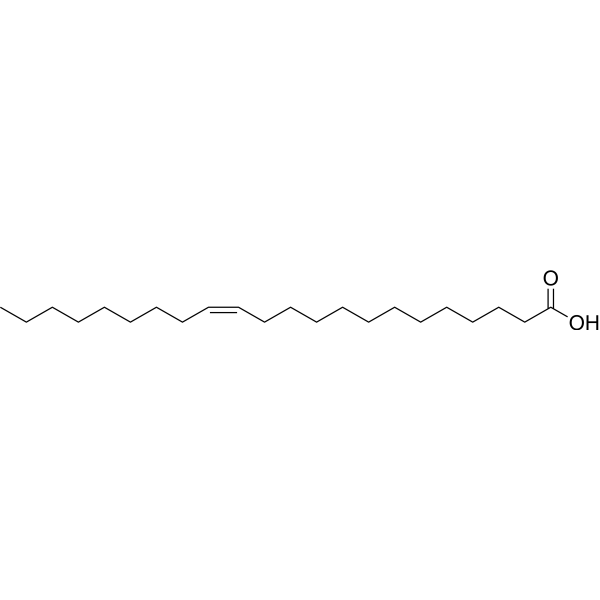
Physicochemical Properties
| Molecular Formula | C22H42O2 |
| Molecular Weight | 338.5677 |
| Exact Mass | 338.318 |
| CAS # | 112-86-7 |
| Related CAS # | 63541-50-4 |
| PubChem CID | 5281116 |
| Appearance | White to off-white <28°C powder,>32°C liquid |
| Density | 0.9±0.1 g/cm3 |
| Boiling Point | 386.1±0.0 °C at 760 mmHg |
| Melting Point | 28-32 °C(lit.) |
| Flash Point | 349.9±15.2 °C |
| Vapour Pressure | 0.0±1.8 mmHg at 25°C |
| Index of Refraction | 1.468 |
| LogP | 9.82 |
| Hydrogen Bond Donor Count | 1 |
| Hydrogen Bond Acceptor Count | 2 |
| Rotatable Bond Count | 19 |
| Heavy Atom Count | 24 |
| Complexity | 284 |
| Defined Atom Stereocenter Count | 0 |
| SMILES | O([H])C(C([H])([H])C([H])([H])C([H])([H])C([H])([H])C([H])([H])C([H])([H])C([H])([H])C([H])([H])C([H])([H])C([H])([H])C([H])([H])/C(/[H])=C(/[H])\C([H])([H])C([H])([H])C([H])([H])C([H])([H])C([H])([H])C([H])([H])C([H])([H])C([H])([H])[H])=O |
| InChi Key | DPUOLQHDNGRHBS-KTKRTIGZSA-N |
| InChi Code | InChI=1S/C22H42O2/c1-2-3-4-5-6-7-8-9-10-11-12-13-14-15-16-17-18-19-20-21-22(23)24/h9-10H,2-8,11-21H2,1H3,(H,23,24)/b10-9- |
| Chemical Name | (Z)-docos-13-enoic acid |
| HS Tariff Code | 2934.99.9001 |
| Storage |
Powder-20°C 3 years 4°C 2 years In solvent -80°C 6 months -20°C 1 month |
| Shipping Condition | Room temperature (This product is stable at ambient temperature for a few days during ordinary shipping and time spent in Customs) |
Biological Activity
| Targets |
Phosphatidylinositide 3-kinase (PI3K) Protein kinase C zeta (PKCζ) Extracellular signal-regulated kinase (ERK) cAMP response element-binding protein (CREB) Protein kinase B (Akt) [1] |
| ln Vitro |
After administration of Erucic acid (3 mg/kg, p.o.), the phosphorylation levels of PI3K, PKCζ, ERK, CREB, and Akt in the mouse hippocampus are significantly increased compared with the vehicle-treated control group (pPI3K: \(t=2.489\), \(P<0.05\); pPKCζ: \(t=4.441\), \(P<0.05\); pERK: \(t=3.744\), \(P<0.05\); pCREB: \(t=4.380\), \(P<0.05\); pAkt: \(t=3.669\), \(P<0.05\)) [1] The phosphorylation level of CaMKII in the hippocampus is not affected by erucic acid [1] |
| ln Vivo |
In the hippocampal regions, erucic acid (oral; 3 mg/kg) increased phosphorylation levels of PI3K, PKC z, ERK, CREB, and Akt in contrast to vehicle-treated controls [1]. In normal naïve mice, Erucic acid (3 mg/kg, p.o.) enhances memory performance in the passive avoidance task, significantly increasing the retention trial latency compared with the vehicle control group (\(F(3,33)=3.609\), \(P<0.05\)) [1] In scopolamine-induced (1 mg/kg, i.p.) memory-impaired mice, erucic acid (3 mg/kg, p.o.) ameliorates cognitive deficits: it reverses the reduced retention latency in the passive avoidance task (\(F(5,53)=19.78\), \(P<0.05\)), increases the spontaneous alternation percentage in the Y-maze task (\(F(5,48)=5.064\), \(P<0.05\)), and does not affect total arm entries (locomotor activity) [1] In the Morris water maze task, erucic acid (3 mg/kg, p.o.) reduces the escape latency of scopolamine-treated mice on training days 4 and 5 (day 4: \(F(3,27)=6.736\), \(P=0.0015\); day 5: \(F(3,27)=11.14\), \(P<0.0001\)); in the probe trial, it recovers the reduced swimming time in the target quadrant without affecting swimming speed (\(F(3,27)=0.8766\), \(P=0.4655\)) or total distance moved (\(F(3,27)=2.157\), \(P=0.1164\)) [1] |
| Cell Assay |
Hippocampal protein phosphorylation detection (Western blot): Mice are sacrificed 1 hour after erucic acid administration, and the hippocampus is isolated. The tissue is homogenized in ice-cold Tris–HCl buffer containing sucrose, EDTA, EGTA, PMSF, sodium orthovanadate, and protease inhibitor. After protein quantification, 15 μg of protein is subjected to SDS-PAGE (8% gels) under reducing conditions, then transferred to PVDF membranes. Membranes are blocked with 5% skim milk, incubated with primary antibodies (anti-pPI3K, anti-PI3K, anti-pAkt, anti-Akt, anti-pPKCζ, anti-PKCζ, anti-pERK, anti-ERK, anti-pCREB, anti-CREB) at 4 °C overnight, followed by horseradish peroxidase-conjugated secondary antibodies. Immunoreactivity is detected via enhanced chemiluminescence and analyzed with imaging software [1] |
| Animal Protocol |
Animal/Disease Models: normal young mice [1] Doses: 3 mg/kg Route of Administration: po (po (oral gavage)) 3 mg/kg Experimental Results: Enhanced phosphorylation levels of hippocampal PI3K, PKC z, ERK, CREB and Akt. Passive avoidance task: Male ICR CD-1® mice (25–30 g, 6 weeks old) are housed 5 per cage (27×22×14 cm) with ad libitum food and water, maintained on a 12-h light/dark cycle (23±1 °C, 60±10% humidity). For memory enhancement study: Erucic acid (1, 3, 10 mg/kg, p.o., suspended in 10% Tween 80) or vehicle is administered 1 h before acquisition trial. Mice are placed in the light chamber, and 10 s later the guillotine door is opened; when entering the dark chamber, a 0.25 mA foot shock is applied for 3 s, and acquisition latency (max 60 s) is recorded. Retention latency (max 600 s) is measured 24 h later. For memory deficit amelioration study: Erucic acid (1, 3, 10 mg/kg, p.o.) or donepezil (5 mg/kg, p.o.) is administered 1 h before acquisition trial, and scopolamine (1 mg/kg, i.p.) is given 30 min before acquisition. Acquisition latency is recorded (max 60 s, forced entry if needed), and a 0.5 mA foot shock is applied; retention latency (max 300 s) is measured 24 h later [1] Y-maze task: Mice are administered erucic acid (1, 3, 10 mg/kg, p.o.), donepezil (5 mg/kg, p.o.), or vehicle 1 h before the trial, and scopolamine (1 mg/kg, i.p.) 30 min before. Mice are placed in one arm of the Y-maze (40×3×12 cm arms, 120° angle), and arm entries are recorded for 8 min. Spontaneous alternation percentage is calculated as (unrepeated alternations / total entries - 2) × 100. The maze is cleaned with 70% ethanol between tests [1] Morris water maze task: Mice are subjected to 7-day tests (habituation, 5-day training, probe trial). The pool (90 cm diameter, 45 cm height) is filled with 22–24 °C water (darkened with black food coloring) to 30 cm. Habituation: Mice swim for 60 s without a platform. Training: A platform (6 cm diameter, 29 cm height) is placed in the target quadrant. Erucic acid (3 mg/kg, p.o.), donepezil (5 mg/kg, p.o.), or vehicle is administered 1 h before the first daily training (2 trials/day); scopolamine (1 mg/kg, i.p.) is given to all groups except control 30 min before training. Escape latency (max 60 s) is recorded. Probe trial: Platform is removed, and mice swim for 60 s; swimming time in target quadrant, speed, and total distance are measured [1] Western blot animal preparation: Mice are administered erucic acid (3 mg/kg, p.o.) or vehicle, sacrificed by cervical dislocation 1 h later, and the hippocampus is isolated for protein extraction [1] |
| ADME/Pharmacokinetics |
Absorption, Distribution and Excretion After injection (14)C-erucic acid emulsion in rapeseed oil, highest cconcn found in lipids of rat liver, followed by spleen & kindey. Fatty acid uptake level into lipids was small in brain, testes & seminal vesicles. Erucic acid was incorporated into diphosphatidylglycerol & syhingomyelin in heart & liver of male rats fed erucic acid for 20 days. Wistar rats were given a single oral dose of 560 mg erucic acid (ethyl ester) ... Erucic acid levels in the stomach and small intestine reached a max 2 hr after dosing (40% of the dose). Erucic acid levels in the colon reached a max 8 hr after dosing (50% of the dose). This suggested that erucic acid was poorly absorbed. Erucic acid levels in cardiac blood also reached a max 2 hr after dosing (14% of total fatty acids, against a background level of 2.5%). Male rats (Wistar strain) were iv injected with a mixture of free (14)C-labeled erucic and (3)H-labeled oleic acid. after 2, 4, 8, 16 and 30 min, radioactivity was examined in blood, liver, heart, kidneys and spleen. At all times studied, the majority of radioactivity was found in the liver, primarily as triglycerides (60% of radioactivity in total lipids) and as phospholipids (20 to 30%). In the other organs tested, radioactivity was found 10 to 15 times lower than in liver. In the heart, (14)C was 3 to 4 times higher than (3)H. More than 80% was recovered in tri-glycerides. In spleen and kidneys, the (14)C:(3)H ratio was particularly high in free fatty acids and monoglycerides. In kidneys, 60% of (14)C was present as nervonic acid in monoglycerides and 40% in phospholipids, suggesting that the mononervonin formed was used for phospholipid biosynthesis. For more Absorption, Distribution and Excretion (Complete) data for ERUCIC ACID (12 total), please visit the HSDB record page. Metabolism / Metabolites Rats fed rapeseed oil (46.2% erucic acid) for 20 wk had 2-fold heart sphingomyelin content incr. After high erucic rapeseed oil, 22:1 was incorporated into cardiolipin (5.6%) & sphingomyelin (10.5%)... Male Wistar rats were fed with erucic acid for 20 days. Erucic acid was incorporated into diphosphatidylglycerol and sphingomyelin in heart and liver. The level of erucic acid incorporated into triacylglycerols and free fatty acids in the heart was higher than in the liver. A study with cultured fibroblasts from normal controls and Zellweger fibroblasts showed that peroxisomes play an important role in the chain-shortening (beta-oxidation) of erucic acid. Male Sprague-Dawley rats were fed with diets containing different levels of erucic acid (22:1 n-9) for 1 wk. An incr in dietary 22:1 n-9 resulted in significantly incr myocardial lipidosis as assessed histologically and by an accumulation of 22:1 n-9 in heart lipids; there was no incr in cardiac triacylglycerol except when high erucic acid rapeseed (42.9% 22:1 n-9) oil was fed. For more Metabolism/Metabolites (Complete) data for ERUCIC ACID (15 total), please visit the HSDB record page. Erucic acid can readily cross the blood–brain barrier (BBB) [1] |
| Toxicity/Toxicokinetics |
Interactions The aim of this study was to evaluate the ability of propionyl-L-carnitine to prevent cardiac damage induced by erucic acid. Rats were fed for 10 days with normal or 10% erucic acid-enriched diets with or without propionyl-L-carnitine intraperitoneally injected, (1 mM/kg daily, for 10 days). The erucic acid diet produced increases in triglycerides (from 5.6 to 12.4 mg/gww, P less than 0.01), and free fatty acids (from 2.0 to 5.1 mg/gww, P less than 0.01), but no changes in phospholipids. When the hearts were perfused aerobically with an isovolumic preparation there was no difference in mechanical activity. On the contrary, when pressure-volume curves were determined, the pressure developed by hearts from the erucic acid-treated rats were reduced. Independent of diet, propionyl-L-carnitine treatment always produced positive inotropy. This was concomitant with improved mitochondrial respiration (RCI 5.1 vs 9.3, P less than 0.01), higher tissue ATP content (10.3 vs 18.4 mumol/gdw P less than 0.01) and reduction of triglycerides (12.4 vs 8.0 mg/gww, P less than 0.01). These data suggest that propionyl-L-carnitine, when given chronically, is able to prevent erucic acid-induced cardiotoxicity, probably by reducing triglyceride accumulation and improving energy metabolism. Seven groups of 24 /male Wistar/ rats were /daily/ fed diets containing 0, 5, 10, 15, 25 or 30 cal% rapeseed oil /(relative concn of erucic acid were 0, 5.5, 11.0, 16.5, 22.0, 27.5 and 33.0 % of dietary fat respectively)/. All diets were made up to 40 cal% fat with sunflower seed oil. Eight animals from each group were killed after 3 days, 6 days, and 32 wk. In each case the skeletal muscles, heart, diaphragm and adrenals were examined microscopically. In addition the thyroids, testicles, pancreas, spleen, liver and kidneys from animals killed after 32 wk were microscopically examined. Growth: no clear relationship between body weight gain and erucic acid treatment was observed. The average body weight of animals fed 30 cal% rapeseed oil was consistently the lowest, and analysis of variance showed that this difference was almost significant by the end of the test. However, the average body weight of animals fed 20 and 25 cal% rapeseed oil were consistently the highest. No clear relationship between body weight and rapeseed oil treatment was observed. Organ weights: Some significant differences were observed between controls and animals treated with at least 15 cal% rapeseed oil. However, no clear treatment related differences were observed. Pathology: In the animals killed after 3 or 6 days, all animals fed rapeseed oil showed lipidosis of the heart, skeletal muscle, diaphragm and adrenals. The severity of lipidosis incr with the level of rapeseed oil. No other abnormalities were observed. In the animals killed after 32 wk, no treatment-related effects were observed in the skeletal muscle, thyroid, pancreas, or liver of any groups. Effects were observed in the kidneys - slight tubular dilation and incr luminal debris was observed in the renal tubules. These effects were most noticeable in the top dose group. Enlargement of the adrenal cortical cells was observed at 10 cal% and above; severity incr with dose. Cardiac changes were also observed, consisting of minimal lipidosis, foci of myocytolysis showing mononuclear cell proliferations, thickening of the reticular muscle fibre sheath, incr interstitial connective tissue elements and aggregates of Anitskow cells. These effects incr in severity with incr doses of rapeseed oil (especially above 10 cal%). Minimal deg of these changes were also observed in 2 control animals. Weanling female /Sprague-Dawley/ rats were fed /daily/ diets containing 0.5%, 5%, 10% or 20% of one of the following fats/oils: coconut oil, butter, tallow, lard, olive oil, rapeseed oil, cottonseed oil, corn oil, soybean oil, sunflower seed oil ... When rats were 50 days old, they were given a single oral dose of dimethylbenz [a] anthrene (DMBA). The diets were continued for 4 months ... More than 85% of the animals /in 20% dose levels/ developed tumors in all groups except those on tallow (80%) and rapeseed oil (77%) ... There tended to be more tumors/rat in animals fed unsaturated fats ... Most of the tumors were adenocarcinomas. /Rapeseed oil/ Eight groups of 5 /male Wistar/ rats were fed daily diets (ad libitum) containing 15% lipids for 12 days. The treatment groups were as follows: BR+: High brassidic acid (28% of lipids), low calcium (0.4%); BR-: Low brassidic acid (1.2% of lipids), low calcium; Br+ Ca: High brassidic acid, high calcium (9.2%); BR- Ca: Low brassidic acid, high calcium; ER+: High erucic acid (28% of lipids), low calcium; ER-: Low erucic acid (1.4% of lipids), low calcium; ER+ Ca: High erucic acid, high calcium; ER- Ca: High erucic acid, high calcium. /The remainder of lipids in each group were made up with maize oil./ There were no significant differences in food consumption alone or weight gain alone. However, if weight gain was adjusted to food consumption, it showed that weight gain for brassidic acid groups was lower in low calcium groups. Weight gain was unaffected for erucic acid groups. All 4 erucic acid groups showed similar levels of heart triglycerides, and C22:1. The hearts showed a mild lipidosis as compared to control rats ... For brassidic acid groups, low calcium decr the heart triglyceride levels. In addition, the triglyceride and C22:1 heart levels were higher in the 2 high brassidic acid groups. For more Interactions (Complete) data for ERUCIC ACID (6 total), please visit the HSDB record page. Non-Human Toxicity Values LD50 Rat oral >19431.7 mg/kg (based on relative density for linoleic acid of 0.0938). LC50 Brachydanio rerio (Zebrafish) 710 mg/L/96 hr; Conditions: semistatic. When applied alone, Erucic acid does not negatively affect survival or cardiac contractility in rats [1] |
| References |
[1]. The memory-enhancing effect of erucic acid on scopolamine-induced cognitive impairment in mice. Pharmacol Biochem Behav. 2016 Mar;142:85-90. |
| Additional Infomation |
Erucic acid is a docosenoic acid having a cis- double bond at C-13. It is found particularly in brassicas - it is a major component of mustard and rapeseed oils and is produced by broccoli, Brussels sprouts, kale, and wallflowers. It is a conjugate acid of an erucate. Erucic acid has been reported in Sinapis alba, Borago officinalis, and other organisms with data available. Erucic Acid is a monounsaturated very long-chain fatty acid with a 22-carbon backbone and a single double bond originating from the 9th position from the methyl end, with the double bond in the cis- configuration. See also: Cod Liver Oil (part of). Mechanism of Action An erucic acid mitochondrial metabolite inhibits mitochondrial oxidn of other fatty acids, esp in heart. Would explain accum of triglycerides in heart of rats fed rapeseed oil containing erucic acid. The effects of erucic acid on the oxygen uptake of heart and liver mitochondria of young was studied by providing the carnitine ester of erucic acid (in comparison to palmitylcarnitine). The presence of erucylcarnitine caused a significant inhibition of the mitochondrial oxidation of palmitylcarnitine. These findings suggest that a mitochondrial metabolite of erucic acid inhibits the mitochondrial oxidation of other fatty acids, especially in the heart, and that this causes the accumulation of triglycerides in the hearts of rats fed rapeseed oil. /Erucylcarnitine/ The effects of high erucic acid rapeseed oil (HER) on fatty acid oxidation in rat liver compared with low erucic acid rapeseed oil (LER) were studied. The results showed that feeding HER to rats led to a decr in the hepatic oxidation capacity of palmitic acid and the liver weight positively correlated with the content of erucic acid in diets and with the length of HER feeding period. The inhibitory action of HER on the oxidation of long-chain fatty acids probably resulted from the incorporation of erucic acid into mitochondrial membranes, interfering the fatty acyl-CoA transferring system on the membranes, but not from the beta-oxidation enzyme system in mitochondria being directly inhibited. Therapeutic Uses /EXPTL THER/ Ten Japanese boys with childhood adrenoleukodystrophy (ALD), one adult patient with adrenomyeloneuropathy (AMN), and two presymptomatic ALD boys were treated with dietary erucic acid (C22:1) for more than 12 months; except in a case of childhood ALD patient who died 7 months after beginning erucic acid therapy. During erucic acid therapy, the serum levels of very long-chain fatty acid (VLCFA) (C24:0/C22:0) decreased within 1-2 months in all patients, and these levels in four of the patients decreased to the normal range. Neurological examination and MRI findings in all 10 of the childhood ALD patients showed progression of the disease while they were receiving the dietary therapy. However, the mean interval between the onset of awkward gait and a vegetative state in diet-treated patients was significantly longer than that in the untreated patients. One AMN patient showed slight improvement of spastic gait and lessened pain in the lower limbs due to spasticity. The two presymptomatic ALD boys remained intact on clinical examination and on MRI findings for 38 and 23 months, respectively, after starting the diet. /EXPTL THER/ A 5-year-old boy with adrenoleukodystrophy, with clinical symptoms of visual, mental and motor disturbances which progressed rapidly, was treated with Lorenzo's oil consisting 1 volume of glyceryl trierucate and 4 volumes of glyceryl trioleate. Five months after initiation of this therapy, ability to swallow was enhanced and T2-weighted magnetic resonance imaging of the brain revealed regression of high intensity area of the parieto-occipital white matter. /Lorenzo's oi/ /EXPTL THER/ An open 2 yr trial of oleic and erucic acids (Lorenzo's oil) included 14 men with adrenomyeloneuropathy, 5 symptomatic heterozygous women and 5 boys with preclinical adrenomyeloneuropathy. No evidence of a clinically relevant benefit from dietary treatment in patients with adrenomyeloneuropathy (accumulation of very-long-chain fatty acids) could be found. /Lorenzo's oil/ Drug Warnings Brain, liver, and adipose lipids were studied in the postmortem tissues of four adrenoleukodystrophy patients who had been treated with a mixture of glyceryl trioleate and trierucate oils (\"Lorenzo's Oil\") and compared to 7 untreated ALD patients and 3 controls. The dietary therapy appeared to reduce the levels of saturated very long chain fatty acids in the plasma, adipose tissue and liver; in the brain they were reduced in only one of the four patients. While substantial amounts of erucic acid were present in some of the tissues even 12 months after therapy had been discontinued, the levels in brain did not exceed those in controls at any time. The failure of erucic acid to enter the brain in significant quantity may be a factor in the disappointing results of dietary therapy for adrenoleukodystrophy. /Lorenzo's oil/ 40 male and 6 female patients with adrenoleukodystrophy received Lorenzos oil (20% erucic acid and 80% oleic acid). In 19 of these patients the platelet count decr significantly. In 6 patients with thrombocytopenia, platelet counts became normal within 2 to 3 mo after erucic acid was omitted from the diet. Observations suggested that strategies for the dietary management of adrenoleukodystrophy requiring the admin of large amt of erucic acid may be associated with thrombocytopenia and that the erucic acid component of Lorenzos Oil is the cause of the thrombocytopenia. Patients treated with erucic acid should be followed closely with determinations of the platelet count. /Lorenzos oil: 20% erucic acid and 80% oleic acid/ ... the biochemical and clinical results obtained during a dietary erucic acid (C22:1) therapy in 20 patients affected by X-linked adrenoleukodystrophy (ALD) /are reported/. Six patients were very severely affected, 9 had milder neurological symptoms and 5 were presymptomatic. Mean basal levels of plasma C26:0 were 1.41 +/- 0.48 ug/mL in ALD patients (control values: 0.33 +/- 0.12). In all patients C26:0 decreased to virtually normal values. In spite of good biochemical response and absence of consistent side effects of therapy, no encouraging data were observed during the clinical follow-up. The presymptomatic subjects were still free of symptoms after more than 1 year of therapy. The symptomatic patients, however worsened or did not show any improvement. 15 men with adrenoleukodystrophy and 3 symptomatic heterozygous women were admin oleic and erucic acids (Lorenzo's oil). Asymptomatic thrombocytopenia developed in 5 patients (platelet counts ranged between 37000 and 84000 per cu mm) but was reversed within 2 to 3 wk after erucic acid was omitted. In addition, long-term treatment with Lorenzo's oil (for 24 to 43 mo) was associated with lymphocytopenia in these 5 patients. The observations suggested that the long-term treatment of adrenoleukodystrophy with Lorenzo's oil can induce severe lymphocytopenia with immunosuppression and recurrent infections. /Lorenzo's oil/ Erucic acid (cis-13-docosenoic acid) is a monounsaturated omega-9 fatty acid isolated from the seed of Raphanus sativus L. [1] It can normalize the accumulation of very long chain fatty acids in the brains of patients with X-linked adrenoleukodystrophy, a neurodegenerative disorder associated with dementia [1] Its memory-enhancing and anti-cognitive impairment effects are partially mediated by activating PI3K–PKCζ–ERK–CREB signaling and increasing phosphorylated Akt in the hippocampus [1] It shows an inverted-U-shaped dose–response curve in passive avoidance and Y-maze tasks, with 3 mg/kg being the optimal dose and 10 mg/kg being less effective [1] It may be a potential therapeutic agent for cognitive deficit-related diseases such as Alzheimer's disease [1] |
Solubility Data
| Solubility (In Vitro) | DMSO : ≥ 100 mg/mL (~295.36 mM) |
| Solubility (In Vivo) |
Solubility in Formulation 1: ≥ 2.5 mg/mL (7.38 mM) (saturation unknown) in 10% DMSO + 40% PEG300 + 5% Tween80 + 45% Saline (add these co-solvents sequentially from left to right, and one by one), clear solution. For example, if 1 mL of working solution is to be prepared, you can add 100 μL of 25.0 mg/mL clear DMSO stock solution to 400 μL PEG300 and mix evenly; then add 50 μL Tween-80 to the above solution and mix evenly; then add 450 μL normal saline to adjust the volume to 1 mL. Preparation of saline: Dissolve 0.9 g of sodium chloride in 100 mL ddH₂ O to obtain a clear solution. Solubility in Formulation 2: 2.5 mg/mL (7.38 mM) in 10% DMSO + 90% (20% SBE-β-CD in Saline) (add these co-solvents sequentially from left to right, and one by one), suspension solution; with ultrasonication. For example, if 1 mL of working solution is to be prepared, you can add 100 μL of 25.0 mg/mL clear DMSO stock solution to 900 μL of 20% SBE-β-CD physiological saline solution and mix evenly. Preparation of 20% SBE-β-CD in Saline (4°C,1 week): Dissolve 2 g SBE-β-CD in 10 mL saline to obtain a clear solution. Solubility in Formulation 3: ≥ 2.5 mg/mL (7.38 mM) (saturation unknown) in 10% DMSO + 90% Corn Oil (add these co-solvents sequentially from left to right, and one by one), clear solution. For example, if 1 mL of working solution is to be prepared, you can add 100 μL of 25.0 mg/mL clear DMSO stock solution to 900 μL of corn oil and mix evenly. (Please use freshly prepared in vivo formulations for optimal results.) |
| Preparing Stock Solutions | 1 mg | 5 mg | 10 mg | |
| 1 mM | 2.9536 mL | 14.7680 mL | 29.5360 mL | |
| 5 mM | 0.5907 mL | 2.9536 mL | 5.9072 mL | |
| 10 mM | 0.2954 mL | 1.4768 mL | 2.9536 mL |