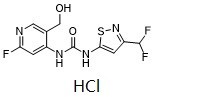
BRM/BRG1 ATP Inhibitor-1 HCl, the hydrochloride salt of BRM/BRG1 ATP Inhibitor-1, is a novel,potent and orally bioactive inhibitor of Brahma Homolog (BRM)/SMARCA2 ATPase with the potential for the treatment of Brahma Related Gene 1 (BRG1)/SMARCA4-Mutant Cancers. It inhibits BRM/BRG1 ATP with an IC50 of 5 nM.
Physicochemical Properties
| Appearance | White to off-white solid powder |
| HS Tariff Code | 2934.99.9001 |
| Storage |
Powder-20°C 3 years 4°C 2 years In solvent -80°C 6 months -20°C 1 month |
| Shipping Condition | Room temperature (This product is stable at ambient temperature for a few days during ordinary shipping and time spent in Customs) |
Biological Activity
| ln Vitro | Compound 14 (BRM/BRG1 ATP Inhibitor-1) (0–10 μM, 5 days) can stop cancer cells from proliferating [1]. The KRT80 gene expression is inhibited by BRM/BRG1 ATP Inhibitor-1, with an absolute AC50 (AAC50) value of 0.01 μM in H1299 cells and 0.01 μM in RERF-LC-AI cells [1]. |
| ln Vivo | Compound 14, also known as BRM/BRG1 ATP Inhibitor-1, can reduce KRT80 expression and tumor growth in a dose-dependent manner when taken orally for three weeks at a rate of 7.5 or 20 mg/kg [1]. |
| Cell Assay |
Cell Proliferation Assay[1] Cell Types: SKMEL5 melanoma cells and SBC-5 small cell carcinoma Tested Concentrations: 0-10 μM Incubation Duration: 5 days Experimental Results: Inhibited the proliferation of SKMEL5 cells with an AAC50 (absolute AC50) value of 0.004 μM and of SBC-5 cells with the AAC50more than 10 μM. |
| Animal Protocol |
Animal/Disease Models: Female athymic nude mice with RERF-LC-AI tumor xenografts[1] Doses: 7.5 mg/kg, 20 mg/kg Route of Administration: Oral administration; everyday; 3 weeks Experimental Results: Inhibited tumor growth by 21% and 55% at doses of 7.5 mg/kg and 20 mg/kg, respectively. Inhibited KRT80 expression by up to 90% at 20 mg/kg for 7 hrs (hours) after administration. |
| References |
[1]. Discovery of Orally Active Inhibitors of Brahma Homolog (BRM)/SMARCA2 ATPase Activity for the Treatment of Brahma Related Gene 1 (BRG1)/SMARCA4-Mutant Cancers. J Med Chem. 2018 Nov 21;61(22):10155-10172. |
Solubility Data
| Solubility (In Vitro) | May dissolve in DMSO (in most cases), if not, try other solvents such as H2O, Ethanol, or DMF with a minute amount of products to avoid loss of samples |
| Solubility (In Vivo) |
Solubility in Formulation 1: ≥ 2.08 mg/mL (6.54 mM) (saturation unknown) in 10% DMSO + 40% PEG300 + 5% Tween80 + 45% Saline (add these co-solvents sequentially from left to right, and one by one), clear solution. For example, if 1 mL of working solution is to be prepared, you can add 100 μL of 20.8 mg/mL clear DMSO stock solution to 400 μL PEG300 and mix evenly; then add 50 μL Tween-80 to the above solution and mix evenly; then add 450 μL normal saline to adjust the volume to 1 mL. Preparation of saline: Dissolve 0.9 g of sodium chloride in 100 mL ddH₂ O to obtain a clear solution. Solubility in Formulation 2: ≥ 2.08 mg/mL (6.54 mM) (saturation unknown) in 10% DMSO + 90% (20% SBE-β-CD in Saline) (add these co-solvents sequentially from left to right, and one by one), clear solution. For example, if 1 mL of working solution is to be prepared, you can add 100 μL of 20.8 mg/mL clear DMSO stock solution to 900 μL of 20% SBE-β-CD physiological saline solution and mix evenly. Preparation of 20% SBE-β-CD in Saline (4°C,1 week): Dissolve 2 g SBE-β-CD in 10 mL saline to obtain a clear solution. Solubility in Formulation 3: ≥ 2.08 mg/mL (6.54 mM) (saturation unknown) in 10% DMSO + 90% Corn Oil (add these co-solvents sequentially from left to right, and one by one), clear solution. For example, if 1 mL of working solution is to be prepared, you can add 100 μL of 20.8 mg/mL clear DMSO stock solution to 900 μL of corn oil and mix evenly. (Please use freshly prepared in vivo formulations for optimal results.) |