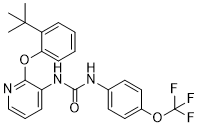
BPTU (BMS-646786), a non-nucleotide structure, is a new P2Y1 antagonist which has recently been described using X-ray crystallography as the first allosteric G-protein-coupled receptor antagonist located entirely outside of the helical bundle. BPTU suppression of spontaneous motility induced by electrical field stimulation in the colon of rats (EC50 = 0.3 μM) and mice (EC50 = 0.06 μM) was concentration dependently inhibited purinergic inhibitory junction potentials. Additionally, both species' stomachs showed concentration-dependent blocking of mechanical inhibitory responses. BPTU shows reduced potency in comparison to MRS2500. BPTU similarly inhibited nicotine-induced relaxation in the rat colon. The P2Y1 agonist MRS2365 and ADPβS-induced cessation of spontaneous contractility were also inhibited by BPTU. We draw the conclusion that BPTU is a novel antagonist that can block the P2Y1 receptor at the GI tract's neuromuscular junction, possessing distinct structural and functional characteristics from nucleotidic antagonists.
Physicochemical Properties
| Molecular Formula | C23H22F3N3O3 |
| Molecular Weight | 445.434296131134 |
| Exact Mass | 445.161 |
| Elemental Analysis | C, 62.02; H, 4.98; F, 12.80; N, 9.43; O, 10.78 |
| CAS # | 870544-59-5 |
| PubChem CID | 11510579 |
| Appearance | White to off-white solid powder |
| Density | 1.3±0.1 g/cm3 |
| Boiling Point | 426.3±45.0 °C at 760 mmHg |
| Flash Point | 211.6±28.7 °C |
| Vapour Pressure | 0.0±1.0 mmHg at 25°C |
| Index of Refraction | 1.591 |
| LogP | 6.21 |
| Hydrogen Bond Donor Count | 2 |
| Hydrogen Bond Acceptor Count | 7 |
| Rotatable Bond Count | 6 |
| Heavy Atom Count | 32 |
| Complexity | 604 |
| Defined Atom Stereocenter Count | 0 |
| SMILES | O=C(NC1C(OC2C(C(C)(C)C)=CC=CC=2)=NC=CC=1)NC1C=CC(OC(F)(F)F)=CC=1 |
| InChi Key | AHFLGPTXSIRAQK-UHFFFAOYSA-N |
| InChi Code | InChI=1S/C23H22F3N3O3/c1-22(2,3)17-7-4-5-9-19(17)31-20-18(8-6-14-27-20)29-21(30)28-15-10-12-16(13-11-15)32-23(24,25)26/h4-14H,1-3H3,(H2,28,29,30) |
| Chemical Name | 1-[2-(2-tert-butylphenoxy)pyridin-3-yl]-3-[4-(trifluoromethoxy)phenyl]urea |
| Synonyms | BMS 646786; BMS-646786; BMS646786; BPTU |
| HS Tariff Code | 2934.99.9001 |
| Storage |
Powder-20°C 3 years 4°C 2 years In solvent -80°C 6 months -20°C 1 month |
| Shipping Condition | Room temperature (This product is stable at ambient temperature for a few days during ordinary shipping and time spent in Customs) |
Biological Activity
| Targets | P2Y1 |
| ln Vitro | BPTU inhibits supramaximal fast inhibitory junction potentials (fIJP) in a concentration-dependent manner the colons of rats and mice. For both the rat and mouse colon, the EC50 of BPTU is roughly 0.3 μM and 0.06 μM, respectively. When the P2Y agonist ADPβS at 10 μM is added to the rat colon, spontaneous contractions are significantly reduced to 43.2±13.4% (N=5) (P=0.0002). This reduction is prevented when BPTU at a concentration of 3 μM (93.3±5.1%) is incubated for 15 minutes. Similar outcomes are seen in the murine colon, where BPTU at 3 μM reverses the effect of ADPβS, which at 10 μM lowers the area under the curve (AUC) of contractions to 15.8±5.1% (N=4) (P<0.0001). In the murine colon, adding a 5 μM concentration of MRS2365, a selective P2Y1 agonist, significantly reduces spontaneous contractions to a 21.2±4.8% (N=5) (P=0.0002); this reduction is prevented by incubating BPTU at a concentration of 3 μM (93.1±3.8%) for 15 minutes. In control conditions (N=5), the BPTU blocks the MRS2365-induced response at 3 μM (10.2±5.5% vs. 86.7±5.0%)[1]. |
| ln Vivo | BPTU is absorbed from the peritoneal cavity rather quickly. The peak blood boron level occurs one hour after dosing. In pigmented tumors, a boron tumor-to-blood ratio exceeding 1 is discovered after just one hour, indicating medication retention. Tumor boron levels closely track blood levels in the non-pigmented tumor variant, which does not exhibit this. Borocaptate sodium (BSH) does not show any selective retention in either tumor for up to 24 hours, but because it is administered in greater amounts than BPTU, it achieves higher maximum tumor boron concentrations. Liver-to-kidney BSH and BPTU boron concentration ratios vary from 2 to 4 and 0.5 to 1, respectively, during the tissue distribution phase[2]. |
| Cell Assay | Strips of colonic rats and mice are used in electrophysiological experiments. Using two silver chloride plates positioned 1.5 cm apart and perpendicular to the preparation's longitudinal axis, electrical field stimulation (EFS) is used to induce inhibitory junction potentials (IJP). Single EFS pulse trains with a pulse duration of 0.4 ms are used in the protocol, and the voltage ranges from 8 to 40 V are covered. Incubation with BPTU at increasing concentrations (1×10⁻⁸ M, 1×10⁻⁷ M, 3×10⁻⁷ M, 1×10⁻⁶ M, and 3×10⁻⁶ M) produces single pulses when the voltage that causes the supramaximal response is applied. The highest dose of BPTU is followed by another train of single pulses at increasing voltages. The difference between the resting membrane potential (RMP) and maximal hyperpolarization is used to calculate the amplitude of the IJP (mV)[1]. |
| Animal Protocol | BPTU is administered intraperitoneally to mice at a dose of 3.15 mg of boron per kilogram of body weight. The range of injection volumes for intravenous and intraperitoneal administrations is 0.25 to 0.5 mL. No medication is administered to six mice in order to measure the background levels of boron. Samples from the tumor, blood, skin, muscle, brain, kidneys, and liver are obtained, and the animals are killed with carbon dioxide 0.2, 0.4, 1, 2, 4, 24 and 48 hours after the drug is administered. Tumor tissue from mice with the B16.013 tumor is examined visually to ensure that there is no pigmentation present. Moreover, BPTU is administered in a multiple dose plan. Intraperitoneally, 0.4 to 0.5 mL of the aforementioned BPTU solution (4×3.15 mg/kg boron) are administered every 2 hours. Samples are taken and the animals are sacrificed twenty-four hours after the last administration[2]. |
| References |
[1]. BPTU, an allosteric antagonist of P2Y1 receptor, blocks nerve mediated inhibitory neuromuscular responses in the gastrointestinal tract of rodents. Neuropharmacology. 2016 Nov;110(Pt A):376-385. [2]. Two disparate ligand binding sites in the human P2Y1 receptor. Nature. 2015 Apr 16; 520(7547): 317–321. |
Solubility Data
| Solubility (In Vitro) | DMSO: ≥ 33.3 mg/mL (~74.8 mM) |
| Solubility (In Vivo) |
Solubility in Formulation 1: ≥ 2.5 mg/mL (5.61 mM) (saturation unknown) in 10% DMSO + 40% PEG300 + 5% Tween80 + 45% Saline (add these co-solvents sequentially from left to right, and one by one), clear solution. For example, if 1 mL of working solution is to be prepared, you can add 100 μL of 25.0 mg/mL clear DMSO stock solution to 400 μL PEG300 and mix evenly; then add 50 μL Tween-80 to the above solution and mix evenly; then add 450 μL normal saline to adjust the volume to 1 mL. Preparation of saline: Dissolve 0.9 g of sodium chloride in 100 mL ddH₂ O to obtain a clear solution. Solubility in Formulation 2: ≥ 2.5 mg/mL (5.61 mM) (saturation unknown) in 10% DMSO + 90% Corn Oil (add these co-solvents sequentially from left to right, and one by one), clear solution. For example, if 1 mL of working solution is to be prepared, you can add 100 μL of 25.0 mg/mL clear DMSO stock solution to 900 μL of corn oil and mix evenly. (Please use freshly prepared in vivo formulations for optimal results.) |
| Preparing Stock Solutions | 1 mg | 5 mg | 10 mg | |
| 1 mM | 2.2450 mL | 11.2251 mL | 22.4502 mL | |
| 5 mM | 0.4490 mL | 2.2450 mL | 4.4900 mL | |
| 10 mM | 0.2245 mL | 1.1225 mL | 2.2450 mL |