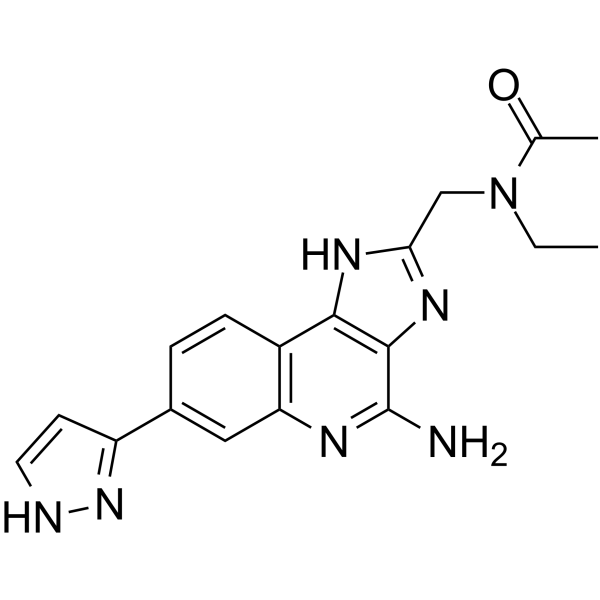
Physicochemical Properties
| Molecular Formula | C18H19N7O |
| Molecular Weight | 349.389762163162 |
| Exact Mass | 349.17 |
| Elemental Analysis | C, 61.88; H, 5.48; N, 28.06; O, 4.58 |
| CAS # | 2242952-69-6 |
| PubChem CID | 137498152 |
| Appearance | White to off-white solid powder |
| LogP | 1.1 |
| Hydrogen Bond Donor Count | 3 |
| Hydrogen Bond Acceptor Count | 5 |
| Rotatable Bond Count | 4 |
| Heavy Atom Count | 26 |
| Complexity | 518 |
| Defined Atom Stereocenter Count | 0 |
| SMILES | O=C(C)N(CC)CC1=NC2C3C=CC(C4=CC=NN4)=CC=3N=C(C=2N1)N |
| InChi Key | UHNRLQRZRNKOKU-UHFFFAOYSA-N |
| InChi Code | InChI=1S/C18H19N7O/c1-3-25(10(2)26)9-15-22-16-12-5-4-11(13-6-7-20-24-13)8-14(12)21-18(19)17(16)23-15/h4-8H,3,9H2,1-2H3,(H2,19,21)(H,20,24)(H,22,23) |
| Chemical Name | N-[[4-amino-7-(1H-pyrazol-5-yl)-3H-imidazo[4,5-c]quinolin-2-yl]methyl]-N-ethylacetamide |
| Synonyms | BMS-986299; 2242952-69-6; VS58MO4P47; BMS986299; Acetamide, N-((4-amino-7-(1H-pyrazol-3-yl)-3H-imidazo(4,5-C)quinolin-2-yl)methyl)-N-ethyl-; N-[[4-amino-7-(1H-pyrazol-5-yl)-3H-imidazo[4,5-c]quinolin-2-yl]methyl]-N-ethylacetamide; UNII-VS58MO4P47; CHEMBL5095170; |
| HS Tariff Code | 2934.99.9001 |
| Storage |
Powder-20°C 3 years 4°C 2 years In solvent -80°C 6 months -20°C 1 month |
| Shipping Condition | Room temperature (This product is stable at ambient temperature for a few days during ordinary shipping and time spent in Customs) |
Biological Activity
| Targets | NLRP3 (EC50 = 1.28 μM) |
| ln Vitro | The pharmacological NLRP3 inhibitor (MCC950) and agonist (BMS-986299) were used to investigate the role of NLRP3 in CVB-D inhibition of pyroptosis in HG-induced PNRCMs. Cytotoxicity of MCC950 and BMS-986299 were determined by MTT assay (Figures 7A,G). Then, we detected LDH releasing leakage in the cell culture supernatant, NLRP3, and pyroptosis pathway-related proteins expression levels. The results suggested that MCC950 inhibited the expression of NLRP3 and downregulated the expression of pyroptosis-related proteins. Thus, MCC950 inhibited cardiomyocyte pyroptosis and alleviated LDH leakage caused by HG. For the LDH content in the medium and Western blot, the results showed that there was no statistical difference compared to HG + MCC950 with HG + CVB-D + MCC950 groups (Figures 7B,E,F). The results of the number of positive cells stained by PI were the same as the Western blot results (Figures 7C,D). In addition, the results of calcein-AM/PI staining suggested that the inhibition effect of CVB-D on cardiomyocyte pyroptosis was abrogated by BMS-986299, which also increased CVB-D–induced downregulation of LDH content in the medium (Figures 7H–J). The pyroptosis pathway-related protein expression was determined by Western blot. Compared with the HG + BMS-986299 group, HG + CVB-D + BMS-986299 could not further affect the expression of pyroptosis-related proteins (Figures 7K,L).[2] |
| ln Vivo | In both in vivo and in vitro experiments, we found that a high-glucose environment significantly upregulated the expression of NLRP3 and pyroptosis pathway-related proteins, and CVB-D inhibited the expression of these proteins. Pyroptosis can deteriorate DNA breakage, so calcein/PI staining was used to identify pyroptosis and living cells. Experimental results showed that the number of PI staining positive cells in the CVB-D group was significantly lower than that in the HG group, showing that CVB-D prevented cardiomyocyte pyroptosis induced by HG. To further explore the relationship between CVB-D improving the PNRCM pyroptosis induced by HG and inhibition expression of NLRP3, we investigated the effect of pharmacological NLRP3 inhibitor (MCC950), agonist (BMS-986299), and NLRP3-shRNA lentivirus on the inhibition of PNRCM pyroptosis by CVB-D. There was no significant difference in the expression levels of NLRP3 and pyroptosis-related proteins between the two groups when the MCC950 or BMS-986299 was used in combination with CVB-D compared with the MCC950 or BMS-986299 alone under the condition of HG. The results suggested that CVB-D may ameliorate the HG-induced PNRCM injury by inhibiting cardiomyocyte pyroptosis via NLRP3 (Figure 9).[2] |
| Cell Assay | After extraction, isolation, purification, culture, and identification of PNRCMs (primary neonatal rat cardiomyocytes), the protective effects of CVB-D on HG (high glucose)-induced PNRCM injury were investigated. The experimental groups were as follows: Control (25 mM glucose Dulbecco’s modified eagle medium, 25 mM glucose DMEM), HG (40 mM glucose); HG + CVB-D. L (0.1 μM), HG + CVB-D. H (1 μM), and HG + Met (0.5 mM), PNRCMs were preincubated with CVB-D and Met for 1 h and then treated with HG for 24 h. Preliminary basic studies have proved that CVB-D has a significant inhibitory effect on NLRP3-mediated cardiomyocyte pyroptosis. In order to further clarify the molecular mechanism of CVB-D on inhibiting PNRCM pyroptosis, NLRP3 inhibitor (MCC950, MedChemExpress, United States) and agonist (BMS-986299, MedChemExpress, United States) were added. The experimental design was as follows: Control (25 mM glucose DMEM), HG (40 mM glucose), HG + CVB-D (1 μM), HG + MCC950 (1 μM) or BMS-986299 (1 μM), and HG + CVB-D + MCC950 or BMS-986299. PNRCMs were pretreated with MCC950 or BMS-986299 for 1 h, then CVB-D was added for 1 h, and finally co-incubated with HG for 24 h.[2] |
| Animal Protocol | Sixty healthy male C57BL/6 mice, 8 weeks old, and weighing 18–24 g were used. The mice were provided by the Animal Experiment Center of Guizhou Medical University, Production License Number: SYXK (Guizhou) 2018-0001. The experiment was approved by the Animal Ethics Committee of Guizhou Medical University (No. 2000904) and followed the ethical standards of animal experiments. The mice were randomly divided into 2 groups with body weight as following: control group (n = 12, normal rat maintenance diet) and HFD group (n = 48, high-fat and high-glucose diet). The control group mice were fed with a standard diet containing 16% protein, 4% fat, and 60% carbohydrate, while the HFD group mice were fed with HFD containing 18% fat, 20% sucrose, 2% cholesterol, 0.2% cholic acid, and 59.8% normal diet (Jiang et al., 2020). The mice in two groups were free to drink water and chew. After 12 weeks of feeding, serum was collected from the tail vein of mice in each group, and fasting blood glucose (FBG) and insulin (INS) levels were detected to calculate the insulin resistance index. The formula was as follows: HOMA-IR = (FBG × INS)/22.5. Mice in the HFD group with insulin resistance were given a single intraperitoneal injection of streptozotocin (STZ, 30 mg/kg), 10 mg/ml sodium citrate buffer (pH 4.5), and the control group was given an equal volume of sodium citrate buffer. After 4 times of continuous injections of STZ, when the FBG level was higher than 11.1 mM, the mice model of type 2 diabetes was reproduced. Then, the mice in the HFD group were randomly divided into 4 groups as follows: DCM, DCM + CVB-D. L (low dose of CVB-D, 0.5 mg/kg/day), DCM + CVB-D. H (high dose of CVB-D, 1 mg/kg/day), and DCM + Met (metformin, 250 mg/kg/day). The control and DCM groups were given saline for the next 2 months. CHO (Cholesterol, Redu Life Sciences Co., Ltd., China), TG (Triglycerides, Redu Life Sciences Co., Ltd., China), and LDH (Lactate dehydrogenase, Nanjing Jiancheng Institute of Biological Engineering, China) contents in serum were detected after the experiment.[2] |
| References |
[1]. Substituted imidazo-quinolines as nlrp3 modulators. WO2018152396A1. [2]. Cyclovirobuxine D Ameliorates Experimental Diabetic Cardiomyopathy by Inhibiting Cardiomyocyte Pyroptosis via NLRP3 in vivo and in vitro. Front Pharmacol. 2022 Jul 5;13:906548. |
| Additional Infomation | NLRP3 Agonist BMS-986299 is a nucleotide-binding domain and leucine-rich repeat (NLR) family pyrin domain containing 3 (NLRP3; NACHT, LRR and PYD Containing Protein 3; NALP3) agonist with potential immunomodulatory and antineoplastic activities. Upon administration, NLRP3 agonist BMS-986299 binds to and activates NLRP3, potentially promoting NLRP3 inflammasome-mediated secretion of interleukin-8 (IL-8), which may induce tumoricidal activity of natural killer (NK) cells against tumor cells. NLRP3, a sensor component of the NLRP3 inflammasome plays a significant role in immunity and inflammation, and may protect against tumorigenesis in some cancers. |
Solubility Data
| Solubility (In Vitro) | DMSO : ~33.33 mg/mL (~95.39 mM) |
| Solubility (In Vivo) |
Solubility in Formulation 1: ≥ 2.5 mg/mL (7.16 mM) (saturation unknown) in 10% DMSO + 40% PEG300 + 5% Tween80 + 45% Saline (add these co-solvents sequentially from left to right, and one by one), clear solution. For example, if 1 mL of working solution is to be prepared, you can add 100 μL of 25.0 mg/mL clear DMSO stock solution to 400 μL PEG300 and mix evenly; then add 50 μL Tween-80 to the above solution and mix evenly; then add 450 μL normal saline to adjust the volume to 1 mL. Preparation of saline: Dissolve 0.9 g of sodium chloride in 100 mL ddH₂ O to obtain a clear solution. Solubility in Formulation 2: ≥ 2.5 mg/mL (7.16 mM) (saturation unknown) in 10% DMSO + 90% (20% SBE-β-CD in Saline) (add these co-solvents sequentially from left to right, and one by one), clear solution. For example, if 1 mL of working solution is to be prepared, you can add 100 μL of 25.0 mg/mL clear DMSO stock solution to 900 μL of 20% SBE-β-CD physiological saline solution and mix evenly. Preparation of 20% SBE-β-CD in Saline (4°C,1 week): Dissolve 2 g SBE-β-CD in 10 mL saline to obtain a clear solution. Solubility in Formulation 3: ≥ 2.5 mg/mL (7.16 mM) (saturation unknown) in 10% DMSO + 90% Corn Oil (add these co-solvents sequentially from left to right, and one by one), clear solution. For example, if 1 mL of working solution is to be prepared, you can add 100 μL of 25.0 mg/mL clear DMSO stock solution to 900 μL of corn oil and mix evenly. (Please use freshly prepared in vivo formulations for optimal results.) |
| Preparing Stock Solutions | 1 mg | 5 mg | 10 mg | |
| 1 mM | 2.8621 mL | 14.3107 mL | 28.6213 mL | |
| 5 mM | 0.5724 mL | 2.8621 mL | 5.7243 mL | |
| 10 mM | 0.2862 mL | 1.4311 mL | 2.8621 mL |