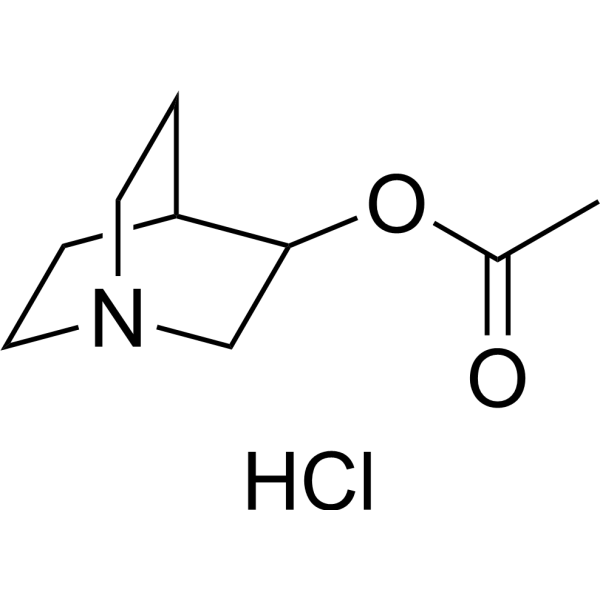
On July 31, 2025, LENZ Therapeutics, Inc. announced the US Food and Drug Administration (“FDA”) approved VIZZ (aceclidine ophthalmic solution) 1.44%, the first and only FDA-approved aceclidine-based eye drop for the treatment of presbyopia in adults. Samples are anticipated in the United States as early as October 2025, with commercial product to be broadly available by mid-Q4 2025. Direct-to-eye care professional sales and marketing activities to be initiated immediately.
The FDA approval of VIZZ was based upon results from three randomized, double-masked, controlled Phase 3 studies. CLARITY 1 and CLARITY 2 were designed to evaluate the safety and efficacy of VIZZ in 466 participants dosed once daily for 42 days. CLARITY 3 evaluated 217 participants for long term safety over a 6-month duration of once daily dosing. In both CLARITY 1 and CLARITY 2, VIZZ achieved all primary and secondary near vision improvement endpoints, demonstrating the ability to improve near vision within 30 minutes and last up to 10 hours. Near vision improvement was reproducible and consistent across both CLARITY 1 and 2. VIZZ was well-tolerated with no serious treatment-related adverse events observed in the over 30,000 treatment days across all three CLARITY trials. The most common reported adverse reactions of participants were installation site irritation, dim vision and headache. The majority of adverse reactions were mild, transient and self-resolving.
Physicochemical Properties
| Molecular Formula | C9H16CLNO2 |
| Molecular Weight | 205.68 |
| Exact Mass | 205.08695 |
| Elemental Analysis | , 52.56; H, 7.84; Cl, 17.24; N, 6.81; O, 15.56 |
| CAS # | 6109-70-2 |
| Related CAS # | Aceclidine;827-61-2;Aceclidine-d3 hydrochloride;2713384-81-5 |
| Appearance | White to off-white solid powder |
| SMILES | CC(=O)OC1CN2CCC1CC2.Cl |
| Synonyms | Quinuclidin-3-yl acetate hydrochloride; Aceclidine hydrochloride; 6109-70-2; Aceclidine HCl; 3-Acetoxyquinuclidine hydrochloride; C 162 D; 3B22O325Q6; 1-Azabicyclo(2.2.2)octan-3-ol, acetate (ester), hydrochloride; 1-Azabicyclo(2.2.2)octan-3-ol, 3-acetate, hydrochloride (1:1); |
| HS Tariff Code | 2934.99.9001 |
| Storage |
Powder-20°C 3 years 4°C 2 years In solvent -80°C 6 months -20°C 1 month Note: Please store this product in a sealed and protected environment, avoid exposure to moisture. |
| Shipping Condition | Room temperature (This product is stable at ambient temperature for a few days during ordinary shipping and time spent in Customs) |
Biological Activity
| Targets |
mAChR1; mAChR3; muscarinic acetylcholine receptor, particularly the M3 subtype. No specific IC50, Ki, or EC50 values were reported [2] |
| ln Vivo |
Aceclidine (1-10 mg/kg, subcutaneous injection) hydrochloride can reverse hemicholinium-3-induced spatial learning deficits in rats[4].
Aceclidine was evaluated for its effect on refractive errors of the eye. In animal models, topical administration of formulations containing Aceclidine resulted in a reduction of myopia, as measured by changes in refractive error. The effect was observed to be dose-dependent, with higher concentrations of the compound leading to more significant improvements in refractive status [1] In experiments where spatial learning was impaired by hemicholinium-3, administration of Aceclidine reversed the deficit. This reversal was demonstrated through improved performance in spatial learning tasks, indicating a role in enhancing cholinergic neurotransmission related to memory and learning [4] |
| Animal Protocol |
For assessing effects on refractive errors, animals with induced myopia were treated with topical ophthalmic formulations containing Aceclidine. The formulations were applied to the eye(s) at specified frequencies (e.g., once or twice daily) for a defined period. Refractive error was measured using retinoscopy or similar techniques before and after treatment to evaluate efficacy [1] In studies on spatial learning, animals were first administered hemicholinium-3 to impair spatial learning. Subsequently, Aceclidine was administered via a specified route (e.g., intraperitoneal injection) at a defined dose. Animals were then tested in spatial learning tasks (e.g., maze tests) to assess reversal of the impairment, with performance metrics recorded and compared to controls [4] |
| Toxicity/Toxicokinetics |
170367 rat LD50 intraperitoneal 105 mg/kg AUTONOMIC NERVOUS SYSTEM: OTHER (DIRECT) PARASYMPATHOMIMETIC Arzneimittel-Forschung. Drug Research., 18(322), 1968 [PMID:5696008] 170367 rat LD50 subcutaneous 225 mg/kg Farmakologiya i Toksikologiya, 23(398), 1960 [PMID:13767763] 170367 rat LD50 intravenous 45 mg/kg Farmakologiya i Toksikologiya, 23(398), 1960 [PMID:13767763] 170367 mouse LD50 oral 165 mg/kg Farmakologiya i Toksikologiya, 23(398), 1960 [PMID:13767763] 170367 mouse LD50 intraperitoneal 116 mg/kg AUTONOMIC NERVOUS SYSTEM: OTHER (DIRECT) PARASYMPATHOMIMETIC Arzneimittel-Forschung. Drug Research., 18(322), 1968 [PMID:5696008] |
| References |
[1]. Storage Stable Compositions and Methods for the Treatment of Refractive Errors of the Eye. Patent US20150290125A1. [2]. Imidazole modulators of muscarinic acetylcholine receptor m3. Patent US20110091459A1. [3]. Enhancement of memory function in aged mice by a novel derivative of xanomeline. Cell Res. 2008 Nov;18(11):1151-3. [4]. Hemicholinium-3 impairs spatial learning and the deficit is reversed by cholinomimetics. Psychopharmacology (Berl). 1989;98(3):347-56. |
| Additional Infomation |
Aceclidine is a cholinergic agent that acts as a modulator of muscarinic acetylcholine receptors, with a focus on the M3 subtype. It is formulated in storage-stable compositions, often with other excipients to enhance stability and efficacy, for topical ophthalmic use in treating refractive errors such as myopia [1] [2] Its ability to reverse hemicholinium-3-induced spatial learning deficits suggests it enhances cholinergic function, which is critical for memory and cognitive processes [4] |
Solubility Data
| Solubility (In Vitro) | DMSO : ~100 mg/mL (~486.19 mM; with ultrasonication) |
| Solubility (In Vivo) |
Solubility in Formulation 1: ≥ 2.5 mg/mL (12.15 mM)(saturation unknown) in 10% DMSO 40% PEG300 5% Tween-80 45% Saline (add these co-solvents sequentially from left to right, and one by one),clear solution. For example, if 1 mL of working solution is to be prepared, you can add 100 μL of 25.0 mg/mL clear DMSO stock solution and add it to 400 μL PEG300, mix well; then add 50 μL Tween-80 to the above system, mix well; then continue to add 450 μL of normal saline to make up to 1 mL. Preparation of normal saline: Dissolve 0.9 g of sodium chloride in ddH₂O and make up to 100 mL to obtain a clear and transparent normal saline solution. Solubility in Formulation 2: ≥ 2.5 mg/mL (12.15 mM)(saturation unknown) in 10% DMSO 90% (20% SBE-β-CD in Saline) (add these co-solvents sequentially from left to right, and one by one),clear solution. For example, if 1 mL of working solution is to be prepared, you can add 100 μL of 25.0 mg/mL clear DMSO stock solution and add it to 900 μL of 20% SBE-β-CD saline solution and mix well. 2 g SBE-β-CD (sulfobutyl ether β-cyclodextrin) powder is diluted to 10 mL of saline and completely dissolved until clear and transparent. Solubility in Formulation 3: ≥ 2.5 mg/mL (12.15 mM)(saturation unknown) in 10% DMSO 90% Corn Oil (add these co-solvents sequentially from left to right, and one by one),clear solution. For example, if 1 mL of working solution is to be prepared, you can add 100 μL of 25.0 mg/mL clear DMSO stock solution and add it to 900 μL corn oil and mix well. (Please use freshly prepared in vivo formulations for optimal results.) |
| Preparing Stock Solutions | 1 mg | 5 mg | 10 mg | |
| 1 mM | 4.8619 mL | 24.3096 mL | 48.6192 mL | |
| 5 mM | 0.9724 mL | 4.8619 mL | 9.7238 mL | |
| 10 mM | 0.4862 mL | 2.4310 mL | 4.8619 mL |