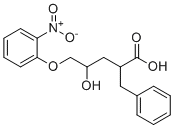
3BDO is a butyrolactone analog which acts as a mTOR activator, it targets FKBP1A and activate the mTOR signaling pathway. In HUVECs, it prevents autophagy.
Physicochemical Properties
| Molecular Formula | C18H17NO5 |
| Molecular Weight | 327.3313 |
| Exact Mass | 327.11 |
| Elemental Analysis | C, 62.60; H, 5.55; N, 4.06; O, 27.80 |
| CAS # | 890405-51-3 |
| Related CAS # | 890405-51-3 |
| PubChem CID | 16216349 |
| Appearance | Off-white to light yellow solid powder |
| Density | 1.3±0.1 g/cm3 |
| Boiling Point | 540.0±20.0 °C at 760 mmHg |
| Flash Point | 233.2±23.8 °C |
| Vapour Pressure | 0.0±1.4 mmHg at 25°C |
| Index of Refraction | 1.594 |
| LogP | 2.56 |
| Hydrogen Bond Donor Count | 0 |
| Hydrogen Bond Acceptor Count | 5 |
| Rotatable Bond Count | 5 |
| Heavy Atom Count | 24 |
| Complexity | 443 |
| Defined Atom Stereocenter Count | 0 |
| SMILES | C1(=C(C=CC=C1)OCC1CC(CC2C=CC=CC=2)C(=O)O1)N(=O)=O |
| InChi Key | AXPZIVKEZRHGAS-UHFFFAOYSA-N |
| InChi Code | InChI=1S/C18H17NO5/c20-18-14(10-13-6-2-1-3-7-13)11-15(24-18)12-23-17-9-5-4-8-16(17)19(21)22/h1-9,14-15H,10-12H2 |
| Chemical Name | 3-benzyl-5-[(2-nitrophenoxy)methyl]oxolan-2-one |
| Synonyms | 3BDO |
| HS Tariff Code | 2934.99.9001 |
| Storage |
Powder-20°C 3 years 4°C 2 years In solvent -80°C 6 months -20°C 1 month |
| Shipping Condition | Room temperature (This product is stable at ambient temperature for a few days during ordinary shipping and time spent in Customs) |
Biological Activity
| Targets | mTOR; FKBP1A |
| ln Vitro | 3BDO inhibits autophagy in human umbilical vein endothelial cells (HUVECs) and neuronal cells. By reducing the levels of the tumor proteins TP53 and NUPR1, TP53 nuclear translocation, and the production of excessive reactive oxygen species, it prevents lipopolysaccharide-induced HUVEC autophagic injury. FKBP1A (FK506-binding protein 1A, 12 kDa), which is the target of 3BDO, stimulates MTOR. While having no effect on the expression of TGFB2, 3BDO significantly reduces the level of FLJ11812, a long noncoding RNA (lncRNA) derived from the 3′ untranslated region (3′UTR) of TGFB2. In addition to FLJ11812 level decline caused by 3BDO, ATG13 protein level also declines. In PC12 neuronal cells, 3BDO inhibits excessive A (25 to 35) peptide-induced autophagy and elevates RPS6KB1 phosphorylation[1]. Human umbilical vein EC (HUVEC) senescence and apoptosis brought on by basic fibroblast growth factor 2 and serum deprivation could be prevented by 3BDO. It prevents the proliferation and migration of vascular smooth muscle cells (VSMCs) while protecting vascular ECs (VECs) specifically[2]. Inhibiting VEC apoptosis and suppressing integrin 4 expression were both possible with 3BDO (20–60 g/ml), but it was unable to reduce the level of ROS brought on by the lack of serum and FGF-2[3]. |
| ln Vivo | In vivo tests revealed that 3BDO had a high level of safety. In App and Psen1 transgenic mice, 3BDO treatment could significantly lower the number of autophagosomes and enhance neuronal function[1]. In the plaque endothelium of apoE-/- mice, 3BDO decreased the protein level of ATG13 while activating mTOR in vivo. Although it had no effect on the activity of mTOR or autophagy in the vascular smooth muscle cells of apoE-/- mice or the macrophage cell line RAW246.7, it did suppress plaque endothelial cell death and restrain the development of atherosclerosis in the mice. In apoE-/- mice, 3BDO stabilized atherosclerotic lesions by protecting VECs by activating mTOR[2]. |
| Enzyme Assay | Using IP lysis buffer, total protein is extracted from HUVECs that have been exposed to rapamycin (10 μM), 3BDO (60 M), or both for 6 hours. The supernatant is collected after centrifuging at 4°C, and it is then incubated with protein A/G agarose beads, TIA1 antibody, or regular mouse IgG as a control at 4°C overnight. The beads are cleaned with IP lysis buffer three times before being eluted with 4×SDS loading buffer. Using a Ser phosphorylation antibody and a western blot assay, Ser phosphorylation can be found. |
| Animal Protocol | Male apoE-/- mice (8 weeks old) are used in this study. ApoE-/- mice are fed an atherogenic diet that contains 21% fat and 0.15% cholesterol. A single batch of the diet is set aside and used throughout the experiment to avoid any potential confounding effects from variation among diet batches. Mice that are 20 weeks older are divided into 3 groups for treatment (n=8 mice/group) for 8 weeks: control (DMSO), low-dose (3BDO; 50 mg/kg/d; 3BDO-L), and high-dose (3BDO; 100 mg/kg/d; 3BDO-H). Every week, when the mice are being injected with 3BDO, their body weight is recorded. Animals are killed by exsanguination and blood samples are taken from the inferior vena cava[2]. |
| References |
[1]. Autophagy. 2014 Jun;10(6):957-71. [2]. Sci Rep. 2014 Jul 1;4:5519. doi: 10.1038/srep05519. [3]. Bioorg Med Chem Lett. 2007 Jan 15;17(2):482-5. |
Solubility Data
| Solubility (In Vitro) |
DMSO: 65~100 mg/mL (198.6~305.5 mM) Ethanol: ~19.7 mg/mL (~60.2 mM) |
| Solubility (In Vivo) |
Solubility in Formulation 1: ≥ 2.5 mg/mL (7.64 mM) (saturation unknown) in 10% DMSO + 40% PEG300 + 5% Tween80 + 45% Saline (add these co-solvents sequentially from left to right, and one by one), clear solution. For example, if 1 mL of working solution is to be prepared, you can add 100 μL of 25.0 mg/mL clear DMSO stock solution to 400 μL PEG300 and mix evenly; then add 50 μL Tween-80 to the above solution and mix evenly; then add 450 μL normal saline to adjust the volume to 1 mL. Preparation of saline: Dissolve 0.9 g of sodium chloride in 100 mL ddH₂ O to obtain a clear solution. Solubility in Formulation 2: 2.5 mg/mL (7.64 mM) in 10% DMSO + 90% (20% SBE-β-CD in Saline) (add these co-solvents sequentially from left to right, and one by one), suspension solution; with ultrasonication. For example, if 1 mL of working solution is to be prepared, you can add 100 μL of 25.0 mg/mL clear DMSO stock solution to 900 μL of 20% SBE-β-CD physiological saline solution and mix evenly. Preparation of 20% SBE-β-CD in Saline (4°C,1 week): Dissolve 2 g SBE-β-CD in 10 mL saline to obtain a clear solution. Solubility in Formulation 3: ≥ 2.5 mg/mL (7.64 mM) (saturation unknown) in 10% DMSO + 90% Corn Oil (add these co-solvents sequentially from left to right, and one by one), clear solution. For example, if 1 mL of working solution is to be prepared, you can add 100 μL of 25.0 mg/mL clear DMSO stock solution to 900 μL of corn oil and mix evenly. (Please use freshly prepared in vivo formulations for optimal results.) |
| Preparing Stock Solutions | 1 mg | 5 mg | 10 mg | |
| 1 mM | 3.0550 mL | 15.2751 mL | 30.5502 mL | |
| 5 mM | 0.6110 mL | 3.0550 mL | 6.1100 mL | |
| 10 mM | 0.3055 mL | 1.5275 mL | 3.0550 mL |